Friday, April 27, 2007

Podcast: How to Set and "Sell" Your Prices

The interview I did with Michelle Nichols, Business Week's Savvy Selling columnist is now live on the Business Week website, for downloading to your iPod of PC.

You can get a copy of the podcast by clicking here.

I hope you enjoy listening to it as much as I had fun making it.

Wednesday, April 25, 2007

Podcast

I've just recorded and interview with New York City -based Business Week, the premier US business magazine. The topic of the interview is "How to set and sell your prices", and it will be available as a downloadable podcast very soon. Details will be posted on this blog, so please check back again shortly.
Posted by Picasa

Friday, March 30, 2007

Pricing Masterclass 2007 - Update #2

The Pricing Masterclasses 2007 were mentioned in the 'MyCareer' supplement in The Age today, Saturday 31st March 2007.

You can see what they said, in page 4 'Networking' column, below.

Sales of the Melbourne event are very strong: early bookings are strongly recommended.
Posted by Picasa

Thursday, March 29, 2007

Low Cost Airlines

Are low cost airlines running out of names?

Click here to see the name of the latest low-cost airline, who plan to start flying to destinations in France, Germany, Italy, Spain & Eastern Europe, from Cardiff International Airport this coming (northern) Autumn.

Monday, March 26, 2007

Saturday, March 24, 2007

Can advertising save phone booths?

Telstra recently announced that it will offer advertising space on telephone booths. This may save thousands of telephone booths around the country apparently, which are suffering from declining usage due to the proliferation of mobile phones.

Will it?

Will advertisers pay to advertise inside phone booths if no one is using them? Probably not. If no one is using them, are people looking for them and therefore at them? The answer once again is probably not.

Telstra says that phone booth advertising has an 80% recall rate. Maybe thats the novelty factor of people saying "Wow, look at that, a phone booth. I wonder who uses that these days?"

What else could Telstra do? Well, perhaps phone booths could become mobile phone recharging stations. After all, mobile phones are not totally wireless: they still need to be recharged. A five minute power recharge station could be one option for phone booths.

Another may be a pre-paid credit vending machine, allowing users on pre-pay plans to quickly grab an extra $20 credit from a vending maching inside the booth. Credit on other Telco's could also be offered in-booth.

These two services could even be combined in the one booth...and I'm sure people would then read in-booth advertising while charging their phones for 5 minutes.

Monday, March 19, 2007

Zara & its competition


Readers of this blog who have attended one of my pricing workshops will know that I use Zara (whose Kuala Lumper store is shown opposite) as an example of a best pricing practice company.

This article, from the BBC wesbite (once again, courtest of Alan Cooper at Managing Change, tells how H&M, is responding (and looking increasingly like) Zara.
Posted by Picasa

Sunday, March 18, 2007

The greatest price since sliced bread

Here's a couple of interesting stories from the BBC website on the pricing of bread and market segmentation...

In-store bread vs in-bag bread and A family that blows its own trumpet

...courtesy of my good friend at Managing Change

Wednesday, February 14, 2007

Inflation in Zimbabwe

I visited Zimbabwe (twice) in the late 1980's. At the time, it was a safe and peaceful country, and at the time was being held up as a model for the rest of Africa (particularly its large southern neighbour) for making a successful transition from minority to majority rule.

How things change. As The Daily Telegraph notes, inflation in Zimbabwe reached 1,394% on the 12th February 2007. Some shop keepers in Harare are predicting dynamic pricing (prices changing by the hour) in 3 months time!

So much for the model country!

Monday, December 18, 2006

What's good for the goose isn't good for the gander...in China

My very good friend Alan Cooper sent me this story from the BBC's website.

Seems its OK for the Chinese to lower the price of everything they produce everywhere...except at home.

Friday, December 08, 2006

2006: The Pricing Year in Review

2006 was a year where Pricing possibly became a bit more transparent. It was a great year to pick up and read a book on Pricing, or to visit a website that helps unlock some of the mystery surrounding the setting of airfares. But it was also a year that the world lost a couple of Pricing pioneers. In February, Sir Freddie Laker passed away at the age of 83. In its obituary, The Economist said “Mr Laker in 1977 introduced the first outrageous discounts, of £118 ($US206) to fly the Laker Skytrain from London to New York, and the first taste of no frills”.

Meanwhile in New York, Sol Cantor passed away in June, at the age of 95. Cantor was an early visionary when it came to discount department stores, and built up Interstate Department Stores and Children’s Supermarket, the latter a predecessor to Toys ‘R’ Us.

The airline industry has been at the cutting edge of Pricing since the deregulation of the US industry in the late 1970’s, and 2006 was no exception. Across the North Atlantic, a new breed of carrier was born: business-class carriers in the form of Silverjet (UK) and Maxjet and Eos (US). Meanwhile, Oasis Hong Kong Airlines (eventually, after some Russian airspace difficulties) started services from Hong Kong to London-Gatwick. Oasis has guaranteed that 10% of its seats will be available at £75 plus taxes.

Meanwhile, British Airways found itself in hot water over “inappropriate discussions” with a competitor on fuel surcharges. This came shortly after the European Union and the US Department of Justice commenced a wider investigation into collusion in the air freight market.

And of course the airlines accelerated the unbundling trend that commenced a couple of years ago (think iTunes, and how it has unbundled the 12-15 track album, or how digital cameras have unbundled the 12/24/36 exposure film). Two European low cost airlines (Flybe, followed shortly thereafter by Ryanair) started the year by announcing they would start charging a fee for passengers to check their baggage, discounted of course when the luggage is booked in advance. Aer Lingus made a similar announcement in August.

And one of the most interesting Web 2.0 sites launched during the year is built on prices: Farecast.com is a US airfare search engine that predicts whether airfares over US city-pairs will rise of fall in the days ahead.

Many companies keep a close eye on the Pricing models used in the aviation industry. 2006 was no exception, with Amtrak announcing its adoption of airline-style revenue management practices on its high-speed Acela train services.

Hotels started to wake up to the poor economics of the mini-bar, and realised that they (a) are labour intensive (it takes 20 employees 7 hours to service the 1,946 mini-bars in the New York Marriott Marquis), (b) create time-consuming disputes when guests check-out and (c) are impossible to customise with guest-preferred contents. Watch out for refrigerators with empty space for your medical and dietary needs.

The Pricing industry itself was also in the news during 2006. Metreo, a vendor of Pricing optimisation software defaulted on a loan in January and was put up for sale by its creditors. Meanwhile, the Pricing scribes were hard at work, and we saw Pricing books released by Baker (Pricing on Purpose), Cram (Smarter Pricing) and Simon, Bilstein & Luby (Manage for Profit, Not For Market Share). And of course, Chris Anderson’s long awaited book The Long Tail was released mid-year. The Long Tail has many implications for Pricing, but in trying to answer what the effect of The Long Tail is on prices, Chris gave the inconclusive answer that “it depends”. Nevertheless, the book was probably the best and most interesting read of the year.

Elsewhere in the world of Pricing:

* Inflation hit 1,000% in Zimbabwe during the year, forcing the central bank to issue a $Z 100,000 note;
* Prices were no longer required for products such as Bankcard, Nikon 35mm camera’s and Telegrams delivered by Western Union, all of which reached the end of their product life cycle in 2006;
* Similarly, the UK electrical retailer Dixons announced it would no longer stock Cathode Ray TVs, 35mm cameras nor CD and cassette players.

And finally, does a year ever pass without some headline-grabbing Pricing disaster? The recently opened Disneyland Hong Kong blocked out 4 days of the Chinese New Year during which discounted admission tickets could be used, failing to realise than Chinese Mainlanders had a 7 day New Year holiday. Needless to say, the thousands turned away at the gate were not too happy.

Wishing you a happy Christmas and a safe and prosperous 2007. Posted by Picasa

Tuesday, December 05, 2006

A Pricing Joke

An American decided to write a book about famous churches around the world. So he bought a plane ticket and took a trip to China.

On his first day he was inside a church taking photographs when he noticed a golden telephone mounted on the wall with a sign that read "$10,000 per call". The American, being intrigued, asked a priest who was strolling by what the telephone was used for. The priest replied that it was a direct line to heaven and that for $10,000 you could talk to God.

The American thanked the priest and went along his way.Next stop was in Japan. There, at a very large Cathedral, he saw the same golden telephone with the same sign under it.He wondered if this was the same kind of telephone he saw in China and he asked a nearby nun what its purpose was. She told him that it was a direct line to heaven and that for $10,000 he could talk to God.

"O.K., thank you," said the American.He then travelled to Pakistan, Sri Lanka, Russia, Germany and France. In every church he saw the same golden telephone, with the same "$10,000 per call" sign under it.

The American decided to travel to India to see if Indians had the same phone. He arrived in India, and again, in the first church he entered, there was the same golden telephone, but this time the sign under it read "One Rupee per call."

The American was surprised so he asked the priest about the sign. "Father, I've travelled all over World and I've seen this same golden telephone in many churches. I'm told that it is a direct line to Heaven, but everywhere else I have been the price is $10,000 per call. Why is it so cheap here?"

The priest smiled and answered, "You're in India now, son - it's a local call".
Sunday, November 19, 2006

Sticky Prices

Avid readers of this blog may recall my previous post on the subject of price changes. The “Economic Focus” column in last week edition of The Economist also looked at the subject of price changes and price stickiness.

The Economist understands the importance of pricing from both a macro and a micro –economic perspective: “Shifts in prices are like the traffic lights of an economy” it says.

The article looks at how economists on both sides of the Atlantic are looking at the volatility of prices and the velocity of their change. For example, two of these economists, Bils and Klenow, have obtained 1995 – 1997 data for 350 items in the US Bureau of Labour CPI basket to calculate that these prices changed at least every four or five months.

Some other interesting findings:

* Sales account for 87% of changes in the price of clothes, 67% of furniture price changes and 58% of processed food price changes;
* Price changes in Europe tend to be bigger than in US (average increase of 8%, average decrease of 10%), and;
* High inflation leads shops to raise prices more often (now there’s a self-fulfilling prophesy if ever I heard one).

What the article does not explore, and which pricing professionals would be particularly interested in, is (a) the reasons for the price changes (competition, costs) and (b) what the impact of those changes was (revenue growth, market share objectives).

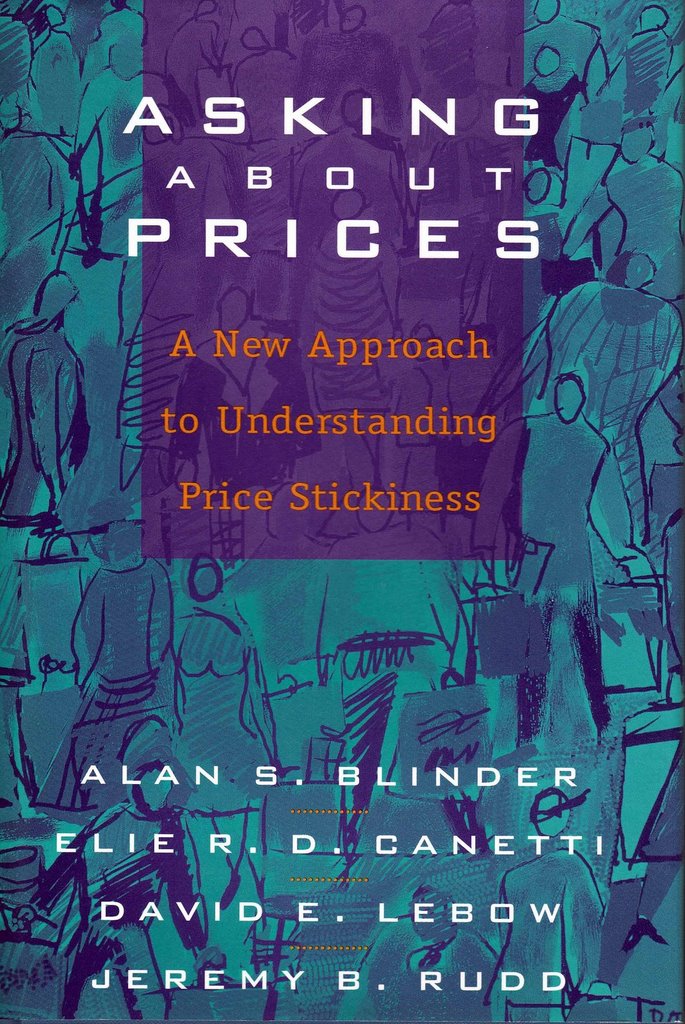
Nevertheless, this new wave of research (see sources at the bottom of The Economist story) adds to the work of Alan Blinder, his team, and their seminal 1998 book “Asking About Prices” Posted by Picasa

Saturday, November 18, 2006

When is a Low Cost Airline not a Low Cost Airline?

When is a low-cost airline not a low cost airline? It seems to be a question being asked by many commentators and passengers these days. And why not? Here’s a list of just some of the ‘optional extra’s available from various airlines, both here in Australia and overseas…

  • Business class lounges (pay-per-use)
  • Seats with extra leg room
  • Inflight entertainment (prices can vary by flight length)
  • Light meal
  • Single meal
  • Full service meal
  • Headphones for the inflight entertainment
  • Portable video player (cheaper if booked in advance)
  • Your baggage (also cheaper if booked in advance)
  • Comfort kits (blankets, eyeshades, socks, inflatable neck support)
  • Kids entertainment backpack (colouring book, pencils, stickers puzzle, soft toy & postcards)

Once you’ve selected your “optional extra’s” and possibly made your way to the out-of –town airport that the carrier uses, you may find you total costs are not that different from those offered by a full service airline out of a more convenient airport.

I’ve already speculated elsewhere on this blog that the day may one day come when a low cost airlines attempts to monetise the aircraft toilet. The other possibility is that the low costs airlines, sooner or later, go full circle and start bundling up all these optional extras, in the same way regulators around the world are increasingly demanding that airlines advertise airfares exclusive of taxes and surcharges.

How much to see U2

Is it coincidence that Irish rockers U2 and the G20 Finance Ministers are all in Melbourne tonight? Maybe the four members of U2 should rename the band G4?

Its a warm night and as I have the front door open, I can hear the music of U2 coming from the telephone company dome.

The finance ministers are less noisy.

I have no idea what it cost to attend tonights U2 concert. But I do know that 22 years ago, during their first tour to Australia in 1984, it only cost $19.90 to see them. Posted by Picasa

Monday, October 23, 2006

On the Road Again

Next month, I start a two-city pricing roadshow, heading back to a couple of my favourite destinations.

First stop is Mumbai, India on Thursday 16th & Friday 17th of November. And from there, its over to Dubai in the United Arab Emirates (pictured) for a workshop on Sunday 19th and Monday 20th November.

I look forward to seeing readers of this blog at one of these two workshops.

If you're not in one of these cities, or cannot make it to one of these events, just drop me an email. There are more events coming up in 2007 - one might just be near you! Posted by Picasa

Monday, October 16, 2006

Fuel Surcharges

The New Zealand website Scoop reported today that Singapore Airlines had decided to lower its fuel surcharge. You can read the full story here. In New Zealand, airfares have to be all-inclusive (not Fare + Taxes + Surcharges), so it would seem that there is no price drop for tickets sold inside NZ.

Meanwhile, also today (spooky, huh?), Qantas announced it too was reducing it fuel surcharge, although News Corp could not help notice that last week Qantas had actually announced a fare rise. Was the fare increase and the surcharge decrease designed to offset each other, the paper asked?

Ticket Scalping

Massachusetts is an interesting state when it comes to pricing. Not only does it have an item pricing law (every item has to have a price tag), it also has an antiscalping law.

That law says that, if one obtains a license, one can resell ticktes for a $2 mark-up above face value, plus certain service charges.

That really doesn't leave much room for an "honest ticket scalper" to make much margin when Ticketmaster charge fees of around $11.25.

No wonder Debbie Lacey accused scalpers of "obscene gouging" when she received a $42 face value Boston Red Sox ticket that had been purhcased for her for a price of $424

Who'd want to be an antlerless deer in Indiana?

Many of you might know that I'm a dedicated follower of pricing glitches and disasters. Here's the latest to land in my Inbox.

It seems that there has been a pricing glitch at the Department of Natural Resources, who dish out bonus deer shooting permits.

- With apologies to all the animal liberationists and lovers of Bambi who may read this blog/posting -

Wednesday, October 11, 2006

Lemonade for my Pimms

As the temperature in Melbourne today headed for a very unseasonal (for mid-October) 29deg C, I decided to head for the supermarket to grab some lemonade to make that most British of summer drinks: Pimms and Lemonade.

Following on from my last post, I discovered that Schweppes mixer bottles of lemonade have now gone from 315ml to 300ml.

I'm not sure what, if any price change, accompanied the volume change. I wonder whether the new bottle will draw consumers attention to or away from the change in volume? Posted by Picasa