
Monday, October 03, 2011
PricingProphets featured in Public Accountant Magazine


Friday, September 30, 2011
Pricing and Self-fulfilling Prophecies
Today's B&T Newsletter runs with the lead story that new research has found that...
"Price is the key factor in Australians' decision to purchase groceries, with eight in ten grocery buyers identifying price as more or just as important as country of origin when purchasing food"
REALLY? And why is that? Clearly, it's a self-fulfilling prophecy which did not require research to prove. If one supermarket spends the last 12-18 months on TV singing "down down, prices are down", what else would matter, besides price.
Here's a spoof of that "down down" ad...
Spoof's of "thats my woolies" aslo worth checking out on YourTube
"Price is the key factor in Australians' decision to purchase groceries, with eight in ten grocery buyers identifying price as more or just as important as country of origin when purchasing food"
REALLY? And why is that? Clearly, it's a self-fulfilling prophecy which did not require research to prove. If one supermarket spends the last 12-18 months on TV singing "down down, prices are down", what else would matter, besides price.
Here's a spoof of that "down down" ad...
Spoof's of "thats my woolies" aslo worth checking out on YourTube
Wednesday, September 28, 2011

Sunday, September 25, 2011
Wednesday, September 21, 2011
Monday, August 22, 2011
PricingProphets.com in The Australian Financial Review

"Well-priced advice for SME's" by Mark Fenton-Jones, which is almost entirely about PricingProphets.com, is the lead story in the Enterprise section of todays (23rd August 2011) Australian Financial Review. The article is behind the paywall, but you can read it here...
Friday, August 12, 2011
InfoGraphic: The Australian Advertising Landscape
 I love a good InfoGraphic. Here's one I've put together on the Australian Advertising landscape, or where companies can sell and promote their products.
Have I missed anything? Suggestions on a postcard to jon (at) pricingprophets.com
Thursday, August 11, 2011
Wednesday, August 10, 2011
Tuesday, August 09, 2011
For everyone else, there's PricingProphets.com
Accenture recently published a paper called “Going for Growth: The Role of Price and Cost in Driving High Performance in a Volatile Global Economy”
If you haven’t got time to read it, here are the key pricing-related points…
• Price optimisation was one of the three most important strategic priorities in the past 18 months for seven out of 10 companies;
• An equal percentage of companies did not have what Accenture would consider to be “sophisticated pricing capabilities”;
• Challenges in optimising pricing include sales execution, inadequate pricing analytics, unclear pricing strategy, inadequate decision support/analytics and governance and accountability incentives;
• Service, innovation and pricing are the most common levers for driving competitive advantage;
• Companies need to excel at delivering meaningful innovation at acceptable cost, and at a price that customers will ultimately pay;
• Companies most frequently use actions by competitors and the balance between supply and demand as inputs in setting price, and;
• Three-quarters of companies do not have a pricing strategy for difference marketing situations, nor is their pricing strategy tightly aligned with their overall business strategy.
The research surveyed 1,000 executives in 12 countries and 8 industries, all of whom have annual revenues over $100mill (ie, 'the top end of town').
And for everyone else, there’s http://www.pricingprophets.com/
If you haven’t got time to read it, here are the key pricing-related points…
• Price optimisation was one of the three most important strategic priorities in the past 18 months for seven out of 10 companies;
• An equal percentage of companies did not have what Accenture would consider to be “sophisticated pricing capabilities”;
• Challenges in optimising pricing include sales execution, inadequate pricing analytics, unclear pricing strategy, inadequate decision support/analytics and governance and accountability incentives;
• Service, innovation and pricing are the most common levers for driving competitive advantage;
• Companies need to excel at delivering meaningful innovation at acceptable cost, and at a price that customers will ultimately pay;
• Companies most frequently use actions by competitors and the balance between supply and demand as inputs in setting price, and;
• Three-quarters of companies do not have a pricing strategy for difference marketing situations, nor is their pricing strategy tightly aligned with their overall business strategy.
The research surveyed 1,000 executives in 12 countries and 8 industries, all of whom have annual revenues over $100mill (ie, 'the top end of town').
And for everyone else, there’s http://www.pricingprophets.com/
Wednesday, August 03, 2011
Friday, July 29, 2011
Monday, July 25, 2011
Aug & Sep Speaking Engagements
I'll be doing a few speaking engagements in the next couple of months. You will be able to hear me...
1. On the September Business Essentials CD-ROM which I'll be recording in early August
2. At the Sales & Marketing Institute in Melbourne on the 16th August (Click here for details), and
3. In Shanghai for one or two value-based pricing workshops from 19th Septmber. Email for more details on this
Jon Manning
PricingProphets.com | Sans-Prix.com
1. On the September Business Essentials CD-ROM which I'll be recording in early August
2. At the Sales & Marketing Institute in Melbourne on the 16th August (Click here for details), and
3. In Shanghai for one or two value-based pricing workshops from 19th Septmber. Email for more details on this
Jon Manning
PricingProphets.com | Sans-Prix.com
Sunday, July 24, 2011
Profit from Pricing & Music
There's some interesting little sound-bytes on the power of music over on Business Insider at the moment. Here's a couple of bits and pieces they authors have missed...
- A 2001 study by the University of Leicester Psychology Dept found that customers would pay more than GBP2.00 for a pint of beer when music was part of the ambience. The average response was GBP3.27 for a pint.
- An 8 week restaurant study found that customers spent 11 mins more at a table when slow beat music was played (compared to fast beat music), resulting in their beverage spend increasing by 41%, and total gross margins increasing by 15%
- But…staff in a data input centre processed 12.5% more vouchers when listening to fast music (compared to no music) and 22.3% more vouchers when compared to slow music
Monday, July 18, 2011

Wednesday, July 06, 2011
ShoeStringLaunch on PricingProphets

Click on the logo to read what ShoeStringLaunch.com had to say about www.pricingprophets.com
AnthillOnline on PricingProphets
 Click on the logo to see what Anthill Online had to say about www.pricingprophets.com, in a story it ran on the 30th June 2011
Thursday, June 23, 2011

Wednesday, June 22, 2011
One of the worst graphs I have ever seen
This had the potential to be a great story on customers NOT buying on price. Unfortunately, I lost all interest in the story when I saw what is perhaps the worst graph I have ever seen.


The text around the image is proof I haven't cropped the image. Full article can be found here.
I assume this has something to do with the publisher, rather than the researcher?

Wednesday, June 08, 2011

Friday, June 03, 2011

Want to know what we've been up to lately? Building the world's first "crowd-sourcing" pricing website", which is now up and running. Providing the most affordable expert pricing advice in the world, you can find the website here.
Tuesday, March 22, 2011
Saturday, January 22, 2011
Zimbabwe...again

Here's a follow-up to my posting on 28th April 2009 on inflation in Zimbabwe, taken in the British Museum last month
Saturday, January 01, 2011
Who will notice your price change?

Think no one is going to notice your sneaky start-of-the-year price increase? Think again! Look at how much trouble The Guardian (1st Jan 2011, p11) went to to show readers the extent of train fare increases effective from the 2nd Jan 2011.
Friday, November 12, 2010

Thursday, November 04, 2010
Friday, October 22, 2010
How did Tata come up with $2,500 for the Nano?
The Tata Nano, a two-cylinder minicar that weighs 1,300 pounds and emits 103 grams of carbon dioxide per kilometer, less than any other car, got its price tag when Tata Group leader Ratan Tata made an offhand comment to journalists that the company could make such a car for $2,500. Newspapers picked up the figure, and the company used it as a challenge to motivate employees, Tata executive Sunil Sinha said in a lecture at Harvard University.
Source: Harvard Business Review, The Daily Stat, 21st October 2010
Source: Harvard Business Review, The Daily Stat, 21st October 2010
Wednesday, October 20, 2010
The FairPay Zone: Business Model Generation with a new spin: FairPa...
The FairPay Zone: Business Model Generation with a new spin: FairPa...: "The radically new FairPay pricing process is particularly relevant to the continuing dialog suggested by 'Business Model Generation,' the re..."
Saturday, January 02, 2010
My first Podcast
My first podcast has now been embedded on the right - - >
Recorded with Michelle Nichols, then the Business Week Savvy Selling columnist, and published on the 26th April 2007
Recorded with Michelle Nichols, then the Business Week Savvy Selling columnist, and published on the 26th April 2007
Friday, June 26, 2009
More developements at Ryanair
Passengers will also have to take their baggage from the airport to the aircraft, eliminating baggage handlers and making tickets even cheaper. What happens on arrival?
More here
More here
Wednesday, June 17, 2009
Ryanair Shock
Ryanair boss Michael O'Leary last night confirmed that the low-cost airline was planning to make passengers fly the plane themselves.
"By sacking all of our pilots and allowing our passengers to fly the planes themselves, we'll be able to make considerables savings that will result in even lower ticket prices"
- Private Eye No 1238, 12th - 25th June 2009, p22
"By sacking all of our pilots and allowing our passengers to fly the planes themselves, we'll be able to make considerables savings that will result in even lower ticket prices"
- Private Eye No 1238, 12th - 25th June 2009, p22
Tuesday, April 28, 2009


Thursday, January 15, 2009
New pricing model for an old industry
There's an interesting debate happening over at Wired on whether a new pricing model will work in an old industry....
Thursday, December 18, 2008
Life Imitates Art
 It wasn't that long ago that the story below, of a car dealer offering a "BOGOF" (Buy-One-Get-One-Free) on Porsche's got widely circulated.
Now its become reality (see above), and proof of how dire the US economy and car industry is, with a Dodge dealer in Florida offering two Rams for the price of one.

Thursday, September 11, 2008
Fuel Surcharges

Here's an interesting development....
It will be interesting to see if other airlines follow.
Monday, September 08, 2008
New Uses for Old Planes
Over the past 10 months, many people have commented on this posting on New Uses for Old Planes.
Well now another use has popped up, this time in Stockholm.
Well now another use has popped up, this time in Stockholm.
Thursday, July 24, 2008

Tuesday, July 22, 2008
Prices (and inflation) in Zimbabwe
Its been a while since my last post on prices and inflation in Zimbabwe. In February last year, inflation was hovering at around 1,394%.
Inflation is now at around 2.2mill per cent, according to this article from France 24 and this article from The Economist.
Inflation is now at around 2.2mill per cent, according to this article from France 24 and this article from The Economist.
Tuesday, July 01, 2008
Aircraft Toilets

In April 2007, I was interviewed by Michelle Nichols for a Business Week Savvy Selling Podcast. You can download the podcast here if you're interested.
In that interview, I talked about how low cost airlines had unbundled all the components of a flight ticket, and instead of charging one all-inclusive price, they had taken to charging for everything they could (meals, inflight entertainment, baggage, etc...collectively known these days as 'ancilliary revenues').
I also hypothesised about how long it would be before the airlines started to charge customers to use the aircraft toilet.
It now seems that others are starting to ask the same question. Sarah Maxwell's book, "The Price is Wrong", contains a forward by Jon Luther, who is the Chairman and CEO of Bunkin' Brands Inc. In his forward, he asks the very same question.
Even though my original hypothesis suggested the airlines were unsure whether to charge by weight or time, I still believe it is not beyond the realms of possibility that this may happen at some point. I was recently told that it costs about $1,000 to flush an aircraft toilet. I'm not sure how true this is, but what is clear is that aircraft toilets are very high tech.
Monday, June 30, 2008
Managing Price Increases
One of the most popular articles on the Harvard Business School Working Knowledge website at the moment is, not surprisingly, "Seven Tips For Managing Price Increases" by John Quelch.
You can read the article here
You can read the article here
Sunday, June 29, 2008
Dow Chemical's Second Price Rise in a Month
Here's an article from the New York Times that illustrates how much pricing pressures some companies are under these days:
Dow Chemical Raises Prices For a Second Time in a Month
Dow Chemical Raises Prices For a Second Time in a Month
Tuesday, May 13, 2008
Pricing in an Economic Slowdown

According to the National Bureau of Economic Research (NBER) in the US, the definition of a recession is “a significant decline in economic activity spread across the economy, lasting more that a few months, normally visible in real GDP, real income, employment, industrial production and wholesale-retail sales"1. The more commonly accepted definition is two consecutive quarters of falling output.
It may still be a little too early to tell whether economies like Australia, the US and the UK are officially in recession or not, but either way, it is time to start thinking about and preparing your pricing strategies for use in a possible economic downturn.
Several articles have recently been published on how marketing strategies should be adapted for an economic slowdown, but they hardly, if at all, touch on how pricing strategies should be modified. In this post, we seek to redress that situation.
John Quelch from Harvard Business School wrote about strategies for an economic downturn in a recent article in The Financial Times2. He makes a number of good marketing –related recommendations. Below, we reprise those recommendations and go one step further, drawing out implications from a pricing perspective:
It may still be a little too early to tell whether economies like Australia, the US and the UK are officially in recession or not, but either way, it is time to start thinking about and preparing your pricing strategies for use in a possible economic downturn.
Several articles have recently been published on how marketing strategies should be adapted for an economic slowdown, but they hardly, if at all, touch on how pricing strategies should be modified. In this post, we seek to redress that situation.
John Quelch from Harvard Business School wrote about strategies for an economic downturn in a recent article in The Financial Times2. He makes a number of good marketing –related recommendations. Below, we reprise those recommendations and go one step further, drawing out implications from a pricing perspective:
Recommendation 1: Focus on Quality
The Rationale: Companies that cut back on the quality of their products and services may find it comes back to haunt them when the economy recovers.
The Implications for Pricing: If you want to, or have to, reduce the quality of products and services, adjust your prices in the same direction as well.
Recommendation 2: Close under-performing areas of the business
The Rationale: This can apply to retail locations, as well as to products and services. It may be better to proactively rationalise now, rather than having to take a reactive, broad-brush approach later. Locations, products and services that are candidates for such action include those that are unlikely to rebound when the business climate improves, based on a re-forecasting of demand.
The Implications for Pricing: If you scale back your retail or trading locations, or your products and services, provide alternatives or transitional arrangements for those customers who may be adversely affected.
Recommendation 3: Buy up financially week competitors
The Rationale: The cost of acquiring financially week competitors may be significantly cheaper than it would be in times of economic prosperity. Particularly attractive will be companies whose customers currently don’t buy from you.
Implications for Pricing: M&A activity provides enormous pricing opportunities in terms of the added value that the merger may create. This should be capitalised on.
Recommendation 4: Expand relationships with customers
The Rationale: In the interest of cost efficiencies, companies will be looking to consolidate suppliers during an economic downturn. It is not a time to cut back on market research, as in times like these, it is even more important than ever to understand customer price elasticity.
Implications for Pricing: Companies should also consider long term supply contracts, and potentially (cost-effective) loyalty and retention programs.
Recommendation 5: Support Distributors
The Rationale: The business model of distributors can come under a great deal of pressure in times like these. Any initiatives that reduce their working capital or excess inventory requirements should be favourably received. Companies may also consider dropping weak distributors.
Implications for Pricing: It might be worthwhile thinking about support measures for distributors, such as early buy allowances, extended finance or improved returns policies.
Recommendation 6: Understand competitors costs structures
The Rationale: As they say, “you’re only as smart as your dumbest competitor”, and some competitors may attempt a market share grab in difficult economic times.
Implications for Pricing: Understand the impact of price wars and price reductions
Quelch does have some specific recommendations around pricing. Recognising that customers will shop around more, he suggests temporary price cuts, reduction in quantity discount thresholds, extended credit facilities, and more aggressive pricing on small-sized products.
There are a number of pricing and advertising additions to these suggestions. Firstly, those temporary price cuts and reductions in quantity discount thresholds should be for a fixed and defined period of time, not for an open-ended duration. The last thing you want to do is condition you customers to cheaper prices infinitum. In some industries, such as mortgages and mobile telephony, customers might look for invoicing and budgeting certainty and switch to fixed interest rates or capped phone plans. Make sure these prices are optimised sooner rather than later. And finally, if there is still money left in the advertising budget, consider spending it on price comparison websites (such as moneysupermarket.com) which is where the price sensitive customers will be looking for the best deals.
Another recommendation comes from a recent Business Week article3, which recommends companies increase financial and operational reporting frequency. This will enable you to monitor trends in sales volumes, revenues and costs, but also keep an eye on the number of days customers take to pay their account. If customers take longer to pay their bill, it might be worthwhile giving them a call, and re-thinking how you “get” your prices and possibly renegotiate payment terms and conditions.
Although the short term outlook for some sectors of the economy is not that rosy, strategies such as those outlined above can go some way towards easing the pain.
References
1 Anon (2008) “The long hangover” in The Economist, 12th April, pp79-80
2 Quelch, J (2008) “Family comes first when marketing faces tougher times” in The Financial Times, 18th February, p14
3 Anon (2008) “Don’t Let the Downturn Get You Down” in Business Week, 20th February, downloaded from www.businessweek.com on 2nd March 2008
There are a number of pricing and advertising additions to these suggestions. Firstly, those temporary price cuts and reductions in quantity discount thresholds should be for a fixed and defined period of time, not for an open-ended duration. The last thing you want to do is condition you customers to cheaper prices infinitum. In some industries, such as mortgages and mobile telephony, customers might look for invoicing and budgeting certainty and switch to fixed interest rates or capped phone plans. Make sure these prices are optimised sooner rather than later. And finally, if there is still money left in the advertising budget, consider spending it on price comparison websites (such as moneysupermarket.com) which is where the price sensitive customers will be looking for the best deals.
Another recommendation comes from a recent Business Week article3, which recommends companies increase financial and operational reporting frequency. This will enable you to monitor trends in sales volumes, revenues and costs, but also keep an eye on the number of days customers take to pay their account. If customers take longer to pay their bill, it might be worthwhile giving them a call, and re-thinking how you “get” your prices and possibly renegotiate payment terms and conditions.
Although the short term outlook for some sectors of the economy is not that rosy, strategies such as those outlined above can go some way towards easing the pain.
References
1 Anon (2008) “The long hangover” in The Economist, 12th April, pp79-80
2 Quelch, J (2008) “Family comes first when marketing faces tougher times” in The Financial Times, 18th February, p14
3 Anon (2008) “Don’t Let the Downturn Get You Down” in Business Week, 20th February, downloaded from www.businessweek.com on 2nd March 2008
Wednesday, May 07, 2008
Business Essentials
In March, I made a rare public speaking appearance. As much as I enjoy these, it can be hard to squeeze them in when you’ve got projects on across three continents.
Brendan Lewis, who among numerous other things, writes The Digital Bottom Line blog for Smart Company, asked me to be part of a panel that spoke on “Sales Models that Sizzle” at the March meeting of The Churchill Club.
As a result of that speaking engagement, last month, I got invited into the studios of Business Essentials, Michael Schildbergers’ outfit that produces a monthly business audio program on CD. I was interviewed by Heather Dawson and the resulting 8 minute interview can be found on the May 2008 Business Essentials CD. I hope all the Business Essentials subscribers enjoy listening to the interview as much as I enjoyed participating in it.
Brendan Lewis, who among numerous other things, writes The Digital Bottom Line blog for Smart Company, asked me to be part of a panel that spoke on “Sales Models that Sizzle” at the March meeting of The Churchill Club.
As a result of that speaking engagement, last month, I got invited into the studios of Business Essentials, Michael Schildbergers’ outfit that produces a monthly business audio program on CD. I was interviewed by Heather Dawson and the resulting 8 minute interview can be found on the May 2008 Business Essentials CD. I hope all the Business Essentials subscribers enjoy listening to the interview as much as I enjoyed participating in it.
Tuesday, January 29, 2008
New Pricing Model
Here's an interesting new pricing model...a sushi restaurant in New York where children's prices are determined by height.
File this one next to the March 2006 pricing model adopted by Ostfriesland Hotel in Norden, Germany, who adopted a weight-based pricing model of €0.50 per kg, per night.
File this one next to the March 2006 pricing model adopted by Ostfriesland Hotel in Norden, Germany, who adopted a weight-based pricing model of €0.50 per kg, per night.
Saturday, January 26, 2008
A bundling story...from an avid reader of this blog
We went to breakfast at a restaurant where the "seniors' special" was two eggs, bacon, hash browns and toast for $1.99.
"Sounds good," my wife said. "But I don't want the eggs."
"Then I'll have to charge you two dollars and forty-nine cents because you're ordering a la carte," the waitress warned her.
"You mean I'd have to pay for not taking the eggs?" my wife asked incredulously.
"Yes!!"
"I'll take the special."
"How do you want your eggs?"
"Raw and in the shell," my wife replied.
She took the two eggs home.
"Sounds good," my wife said. "But I don't want the eggs."
"Then I'll have to charge you two dollars and forty-nine cents because you're ordering a la carte," the waitress warned her.
"You mean I'd have to pay for not taking the eggs?" my wife asked incredulously.
"Yes!!"
"I'll take the special."
"How do you want your eggs?"
"Raw and in the shell," my wife replied.
She took the two eggs home.
Tuesday, December 11, 2007
There are known known's...
The annual Plain English Awards have just been handed out in the UK. Some of the winners appear on the BBC's website, where readers can also put forward their interpretation on what companies are trying to say.
The gong that is currently attracting the most re-interpretation relates to (I think) Virgin Train's pricing structure...
"Moving forwards, we at Virgin Trains are looking to take ownership of the flow in question to apply our pricing structure, thus resulting in this journey search appearing in the new category-matrix format. The pricing of this particular flow is an issue going back to 1996 and it is not something that we can change until 2008 at the earliest. I hope this makes the situation clear."
Click here (then scroll down) to see what people think this might mean.
[Thank you to one of the frequent readers of this blog for emailing me this story]
The gong that is currently attracting the most re-interpretation relates to (I think) Virgin Train's pricing structure...
"Moving forwards, we at Virgin Trains are looking to take ownership of the flow in question to apply our pricing structure, thus resulting in this journey search appearing in the new category-matrix format. The pricing of this particular flow is an issue going back to 1996 and it is not something that we can change until 2008 at the earliest. I hope this makes the situation clear."
Click here (then scroll down) to see what people think this might mean.
[Thank you to one of the frequent readers of this blog for emailing me this story]
Tuesday, October 09, 2007
The Next Big Thing in Low Cost Airlines

Here's a fantastic story from India, via The Times Online, on the next big thing in low cost airlines.
Friday, October 05, 2007
Another Low Cost Airline Pioneer Passes Away
Last year, I commented on the passing away of Sir Freddie Laker, one of the pioneers of the low cost aviation movement.
Sadly, we've just lost another pioneer - Tony Ryan, who formed what is now Ryanair. You can read the New York Times obituary here.
Sadly, we've just lost another pioneer - Tony Ryan, who formed what is now Ryanair. You can read the New York Times obituary here.
Tuesday, October 02, 2007
What do the FT, Radiohead and campaigners against ticket scalpers have in common?
A couple of interesting pricing stories broke overnight. The first comes from the website of London Financial Times, which preempting a similar move by Rupert Murdoch at the website of the Wall Street Journal, announced that it was making much more of its content available free of charge. You can read coverage from the Sydney Morning Herald here, and from The Independent here.
Another big story, reported by the ABC here, and the BBC here, was the decision by the band Radiohead to let fans determine how much they want to pay for their next album – even nothing if they so wish. There are a number of restaurants around the world that offer this sort of pricing model, including one here in Melbourne in the beach side suburb of St Kilda. I can’t remember who told me this, but I do recall hearing that the owner of this restaurant in St Kilda operates a number of eating houses, and guess which one is the most profitable? The one where diners pick the price they pay.
The final story is this one from The Age which talks about how music fans are fighting back against ticket scalpers.
Another big story, reported by the ABC here, and the BBC here, was the decision by the band Radiohead to let fans determine how much they want to pay for their next album – even nothing if they so wish. There are a number of restaurants around the world that offer this sort of pricing model, including one here in Melbourne in the beach side suburb of St Kilda. I can’t remember who told me this, but I do recall hearing that the owner of this restaurant in St Kilda operates a number of eating houses, and guess which one is the most profitable? The one where diners pick the price they pay.
The final story is this one from The Age which talks about how music fans are fighting back against ticket scalpers.
Saturday, September 22, 2007
This Week's Pricing Wrap
There were a couple of interesting pricing stories that caught my attention this week. You may recall my posting on the 20th August which talked about a couple of UK supermarkets possibly being a bit too demanding on their suppliers during a price war earlier this year.
Well, the UK supermarkets are under the spotlight again, this time for (apparently) fixing dairy prices. The BBC carried the story on their website here, while The Independent’s story may be accessed from here. An accompanying piece carried by The Independent asks “The Big Questions: Have supermarkets become just too powerful in Britain?" Good question, the article presents both sides of the argument, but at the end of the day, I think the customer will decide.
The other big story of the week came from The Guardian that reported that Rupert Murdoch is (still) considering the possibility of making the content of wsj.com (The Wall Street Journal) available for free. In my opinion, wsj.com is perhaps the best monetised site on the web, however, as the article points out, the trend is in the opposite direction:
- The LA Times has recently dropped fees, and
- The New York Times has also recently stopped charging for TimesSelect (its archive and influential columnists), which has over 200,000 subscribers.
I wonder whether these developments will be digested by the folks at the Australian Financial Review, who on Friday admitted that they had got their site wrong (www.afr.com.au) (too much Flash, little free content). The site will go through its second overhaul this year in the next couple of weeks – it will be interesting to see if pricing is part of that overhaul.
Well, the UK supermarkets are under the spotlight again, this time for (apparently) fixing dairy prices. The BBC carried the story on their website here, while The Independent’s story may be accessed from here. An accompanying piece carried by The Independent asks “The Big Questions: Have supermarkets become just too powerful in Britain?" Good question, the article presents both sides of the argument, but at the end of the day, I think the customer will decide.
The other big story of the week came from The Guardian that reported that Rupert Murdoch is (still) considering the possibility of making the content of wsj.com (The Wall Street Journal) available for free. In my opinion, wsj.com is perhaps the best monetised site on the web, however, as the article points out, the trend is in the opposite direction:
- The LA Times has recently dropped fees, and
- The New York Times has also recently stopped charging for TimesSelect (its archive and influential columnists), which has over 200,000 subscribers.
I wonder whether these developments will be digested by the folks at the Australian Financial Review, who on Friday admitted that they had got their site wrong (www.afr.com.au) (too much Flash, little free content). The site will go through its second overhaul this year in the next couple of weeks – it will be interesting to see if pricing is part of that overhaul.
Friday, September 14, 2007
Professor Sir Clive Grainger
Last Wednesday night (12th September 2003), I went along to a free lecture given by one of the winners of the 2003 Nobel prize for Economics, the author of 12 books (one of which I used in my under-graduate degree) and over 250 articles and, a person who, by some accounts, is a bigger Welsh hero that King Arthur (I didn’t even know King Arthur was Welsh!).
The man in question is Prof. Sir Clive Granger, and the topic of his presentation on Wednesday night was "trends" (particularly in time series data), although there was quite a bit of discussion about forecasting as well. Trends and forecasting are both related to the art and science of pricing, so I thought I’d use this posting to talk about some of the key message I got out of the lecture…
Firstly, apparently no one has ever defined what a “trend” is, a term that first came into use in 1901. Interestingly, the word “trending” has been used since the 16th or 17th century. One commonly used definition is that “one end is different to the other end”, which would suggest that a flat line is not a trend;
There can be trends in levels (i.e. an upward trend), but there can also be trends in volatility – worth keeping in mind;
You can’t judge a trend – you need to know what’s going on behind it, what’s causing it. Prof. Granger suggested that the trend of Shanghai A-share index between 2002 – 2007 is a bubble, caused by the psychology of the investors
You can’t effectively forecast the economy more than three years in advance
What’s easy to forecast…things like population trends
What’s hard to forecast…exchange rates, stock market indices, anything related to an industry where policy issues matter, commodity prices and anything in a speculative market
What are we getting better at forecasting…demand for electricity (apparently)
Thursday, September 13, 2007
One year
A couple of years ago, the online travel portal, Expedia, posted a price of $2 - $4 per night for a stay at the Tokyo or Osaka Hilton. Unfortunately for the person who booked a one year stay at one of the properties, the error was not honoured.
But here's an interesting story from The Daily Telegraph of a couple who have been living in Travelodge properties for the last 22 years. Turns out their move has been cheaper than aged care.
Having stayed in many Travelodge properties on my travels through the UK, I wouldn't say 22 years was my kettle of fish. But the Davidson's obviously don't mind it...
''It doesn't get much better than that does it? We only have to walk across the car park for meals as there is a Little Chef here too.''
''Our room looks out to the car park and a busy slip road where lorries pass by throughout the night.''
Good luck to them. What the pricing moral of this story? Be aware of who your competitors are, event the indirect competitors and substitues, as well as their prices.
But here's an interesting story from The Daily Telegraph of a couple who have been living in Travelodge properties for the last 22 years. Turns out their move has been cheaper than aged care.
Having stayed in many Travelodge properties on my travels through the UK, I wouldn't say 22 years was my kettle of fish. But the Davidson's obviously don't mind it...
''It doesn't get much better than that does it? We only have to walk across the car park for meals as there is a Little Chef here too.''
''Our room looks out to the car park and a busy slip road where lorries pass by throughout the night.''
Good luck to them. What the pricing moral of this story? Be aware of who your competitors are, event the indirect competitors and substitues, as well as their prices.
Saturday, September 08, 2007
Pop Economics
 I’m a little bit behind in my reading at the moment, so I apologise if this posting sparks an interest in an edition of a publication that is no longer available in print on the newsstands.
I’m very interested in the role of pricing and disruptive technologies, such as Skypes’ impact on traditional telco’s pricing models, or digital photography’s impact on ‘analogue’ photography. Pop Economics, written by Robert Sandall and published in the August 2006 edition of Prospect Magazine is one of the best articles I’ve read on the economics of the music industry.
The articles opens with the story of a band that stops selling their $10 CD’s at concerts because it was cannibalising sales of its $20 t-shirts. I’ve previously spoken about rock ‘n’ roll t-shirt pricing here.
Why did Prince give everyone attending his shows at London’s O2 arena in August, and readers of The Mail on Sunday, a free copy of his Planet Earth CD? The reason is perhaps best summed up by the guitarist from Anthrax, who say “their album are the menu, the concert is the meal”.
In effect, recorded music is becoming a loss leader….but how did the industry get there? Well, apparently it’s partly got itself to blame. Free-to-air radio commenced in the 1930’s. 12” LP’s were the dominant music format until the mid 1960’s when the 7” single took over. Then along came CD’s in the 1980’s, hoping to persuade everyone to replace their vinyl records collections. The “Home Taping is Killing Music” campaign reached its peak in the 1980’s and by 1994 the CD had become more popular than cassette tapes, which had sparked that campaign. But, as the article discusses, record companies were selling CDs and giving away their master tapes. And of course, we then get into Napster and iTunes, which brings us up-to-date.
So while the pressure on recorded music pricing has been all downwards, it’s the opposite in live music: the trend has all be upwards, and I’ve also commented about this in other blog postings, as does Pop Economics: in the 1980’s the price differential between a Madonna CD and a ticket to one of her concerts was negligible. A ticket to see her at Wembley last summer was more than twice the price of her entire back catalogue.
The last paragraph of the article is one that I’d like to quote in full, because not only does it apply to pop economics, it also applies to many Web 2.0 sites, which I’ve also written about in the past. It reads:
In his book e-Topia, William Mitchell relates the increasing value of shared
experience to the isolated nature of electronic or online virtual worlds. “in
conducting our daily transactions, we will find ourselves constantly considering
the benefits of the different grades of presence that are now available to us,
and weighting these against the costs” he writes. Being in the same place at the
same time as a live performance, music fans appear to have decided, is the
rarest and most precious presence of all.
Thursday, September 06, 2007
The iPhone (Nbr 2)
Well here's something you don't see very often....a company giving compensation to customers who previously purchased, at full price, a product that has subsequently been discounted.
A $US100 voucher to those customers who purchased the 8GB iPhone. And the 4GB iPhone? Well, thats been discontinued altogether.
A $US100 voucher to those customers who purchased the 8GB iPhone. And the 4GB iPhone? Well, thats been discontinued altogether.
The iPhone (Nbr 1)
When the iPod first came out, some people thought that iPod stood for "idiots price our devices". When the iPhone first came out (on 29th June this year), some commentators (like this one and this one) suggested that the iPhone was underpriced.
Not according to Apple and the New York Times, which is just one of many publications around the US and the world, covering today's unexpected iPhone price cut.
Not according to Apple and the New York Times, which is just one of many publications around the US and the world, covering today's unexpected iPhone price cut.
Monday, September 03, 2007
A digital set-top for £10 ???
An avid reader of this blog kindly sent me a link to a very interesting story on the BBC website, which you can read here.
The email continues...
[I] didn't see this whilst shopping at Tesco tonight (wasn't even looking) but did notice some strange price differentials - nothing new but it gets me wondering: Why should brown wholemeal pasta be 50% more expensive than white - same brand, same shape pasta, same size pack. It's the "Healthy" premium I suppose. And Organic: sometimes products twice as much and some the same price or even cheaper than non organic.
Or perhaps brown wholemeal pasta is just being sold above cost...unlike the £10 digital set-top boxes :-)
The email continues...
[I] didn't see this whilst shopping at Tesco tonight (wasn't even looking) but did notice some strange price differentials - nothing new but it gets me wondering: Why should brown wholemeal pasta be 50% more expensive than white - same brand, same shape pasta, same size pack. It's the "Healthy" premium I suppose. And Organic: sometimes products twice as much and some the same price or even cheaper than non organic.
Or perhaps brown wholemeal pasta is just being sold above cost...unlike the £10 digital set-top boxes :-)
Monday, August 27, 2007
Rip-off Ryanair?
I am still in the UK, where there hasn’t been much of a summer, except for this bank holiday weekend, which has been absolutely magnificent. So while I was reading the papers over the weekend, I stumbled across the news that the folks at Ryanair are about to start charging £4 to check-in. Don’t believe me? Read it here.
I tend to agree with the comments in this article that this charge is pushing things just a little bit too far. Yes, the low cost airlines have unbundled the traditional flight ticket to a pay-as-you-go model, and they have made air travel more affordable to the masses. But, to be blunt, this charge will piss customers off. And it should play nicely into the hands of airlines like easyJet (no, I don’t own stock, but I did used to work for Stelios), provided they don’t become too greedy.
Guess I was wrong with my February 2006 prediction that the toilets would be the next thing to be monetized.
I tend to agree with the comments in this article that this charge is pushing things just a little bit too far. Yes, the low cost airlines have unbundled the traditional flight ticket to a pay-as-you-go model, and they have made air travel more affordable to the masses. But, to be blunt, this charge will piss customers off. And it should play nicely into the hands of airlines like easyJet (no, I don’t own stock, but I did used to work for Stelios), provided they don’t become too greedy.
Guess I was wrong with my February 2006 prediction that the toilets would be the next thing to be monetized.
Monday, August 20, 2007
Some news on supermarkets and search engines
One of the main differences between an everyday low pricing (EDLP) strategy and a high/low pricing strategy is that the former is often retailer lead, while the latter can be more supplier lead. Today’s edition of The Guardian newspaper carries a story on just how much an EDLP strategy may be retailer lead.
When I was last here in the UK in June, a banana price war broke out, and subsequently spread to other products. In the process of completing a study on the way the UK supermarket industry operates, the Competition Commission has discovered that a couple of the supermarkets may have been a bit too demanding of their suppliers during this price war. You can read the full Guardian story here.
Meanwhile, and this isn’t exactly a pricing story, Google is finding itself in a bit of hot water of late. As this story tells, it is reportedly being sued by American Airlines, who are finding that users who search for the airline are being given sponsored links to AA’s competitors in the search results. A similar practice was discovered in Australia a couple of weeks ago. A search engine, such as Google, is a two-sided market. It must please both its users and its advertisers, though Google only monetises one side of this market (the advertiser). But clearly, failure to provide its users with relevant search results can be detrimental to its cost-per-click revenue stream.
When I was last here in the UK in June, a banana price war broke out, and subsequently spread to other products. In the process of completing a study on the way the UK supermarket industry operates, the Competition Commission has discovered that a couple of the supermarkets may have been a bit too demanding of their suppliers during this price war. You can read the full Guardian story here.
Meanwhile, and this isn’t exactly a pricing story, Google is finding itself in a bit of hot water of late. As this story tells, it is reportedly being sued by American Airlines, who are finding that users who search for the airline are being given sponsored links to AA’s competitors in the search results. A similar practice was discovered in Australia a couple of weeks ago. A search engine, such as Google, is a two-sided market. It must please both its users and its advertisers, though Google only monetises one side of this market (the advertiser). But clearly, failure to provide its users with relevant search results can be detrimental to its cost-per-click revenue stream.
Friday, August 10, 2007
Pricing Nostalgia
 This week’s blog posting is all about pricing nostalgia. You may recall my posting back in November last year about the price of U2 tickets….in 1984 ($19.90).
 Well during the week, I stumbled across a website with a fantastic name (http://www.ticketsonyourself.com) which sells T-shirts with old (and some not-so-old) concert tickets printed on them.
There have been many reasons put forward for concert ticket price inflation over the years. Some authors have blamed The Eagles (people were always going to pay once Hell Froze Over), while others suggest that as sales of recorded music has declined (thanks to Napster, and more recently iTunes), artists have re-balanced their revenue stream, by increasing live performance ticket prices and thus revenue.
It’s great to flick through the t-shirt designs on offer on this website, and not only see some of the prices (Woodstock at $8 per day, or $24 for all three days – perhaps bundling hadn’t been invented then?) as well as some of the support acts (Bob Dylan with Eric Clapton and his Band).
Enjoy.
There have been many reasons put forward for concert ticket price inflation over the years. Some authors have blamed The Eagles (people were always going to pay once Hell Froze Over), while others suggest that as sales of recorded music has declined (thanks to Napster, and more recently iTunes), artists have re-balanced their revenue stream, by increasing live performance ticket prices and thus revenue.
It’s great to flick through the t-shirt designs on offer on this website, and not only see some of the prices (Woodstock at $8 per day, or $24 for all three days – perhaps bundling hadn’t been invented then?) as well as some of the support acts (Bob Dylan with Eric Clapton and his Band).
Enjoy.
Sunday, July 29, 2007
The price of dying...in Moscow
Here’s an interesting article from The Moscow Times on the cost of dying, which is possibly an example of poor pricing, poor economics, poor journalism, or possibly all three.
In the second paragraph, the article mentions that the costs of a new grave in Moscow is currently 4,400 rubles, but the state provides 5,700 rubles towards the cost of burials, suggesting that the municipally-owed burial service, Ritual, would be 1,300 rubles ahead on each burial. Could this be what makes Russia one of the world’s most dangerous places?
The other interesting comment is the sentence “One reason for changes in prices is that the number of burials of low-income individuals as increased”. Does this mean that the price increase will lead to more high-income burials?
Hmmmmm
In the second paragraph, the article mentions that the costs of a new grave in Moscow is currently 4,400 rubles, but the state provides 5,700 rubles towards the cost of burials, suggesting that the municipally-owed burial service, Ritual, would be 1,300 rubles ahead on each burial. Could this be what makes Russia one of the world’s most dangerous places?
The other interesting comment is the sentence “One reason for changes in prices is that the number of burials of low-income individuals as increased”. Does this mean that the price increase will lead to more high-income burials?
Hmmmmm
Friday, July 27, 2007
Segmenting the Market for Digital Products
 Market segmentation is a critical component of any pricing strategy. When it comes to digital products, market segmentation often goes by the moniker of “versioning”. To give just two examples, digital product may be versioned by dimensions such as timeliness (delayed data is cheaper than recent data) or speed (versions of software that run at faster speeds are more expensive than those that run at a slower speed).
This story on a free wi-fi network along a 22km stretch of the Thames River in London is an example of versioning at work. The service is free at download speeds of up to 256kbps to users who agree to watch a 15-30sec advertisement every 15mins or so (that’s versioning by annoyance), while anyone who wants to pay for the service will not only avoid the commitment to watch an advertisement, they’ll also get faster download speeds.
By the way, further information on versioning can be found in “Information Rules: A Strategic Guide to the Network Economy”, by Carl Shapiro and Hal Varian can be found here.
Wednesday, July 18, 2007
Pricing & Web 2.0

There are a number of industries that are currently facing what I call “disruptive business models”. Some examples include:
- Traditional recorded music formats, such as CD’s, which were first challenged by peer-to-peer file sharing networks like Napster (Mk I), and now by the likes of iTunes;
- “Analogue” (paper and chemical –based) photography, which is under attack from digital photography;
- Print newspapers, and particularly their advertising revenue base, which is under attack from not only the internet (news and classified sites), but also from free commuter newspapers such as The London Paper, City AM, Metro (all in London), and MX, here in Melbourne;
- Traditional telephony is under attack from the likes of VoIP service providers such as Skype, and;
- Finally there is the 200 year old Encyclopaedia Britannica that is facing stiff competition from Wikipedia.
It is now becoming fairly clear in my mind that the Web 2.0 movement is also becoming another “disruptive business model”, and like the ones mentioned above, potentially damaging to the pricing and revenue management practices of the industries or businesses they are disrupting.
Let’s say you run a petrol station in Dublin. You service is far superior to that of any of your competitors: you clean drivers’ windscreens, you check their oil and water, your forecourt is immaculately landscaped, and you charge 5 euro cents more than the competition as a result. Along comes a site like http://www.pumps.ie/ where users can not only see how much you’re charging, they can see your pricing history and that of your competitors. All of a sudden, that premium you’ve been able to command is under pressure.
In my posting of 8th December 2006 titled “2006: The Pricing Year in Review” , I commented about a website called Farecast.com which predicts whether airfares will rise, fall or remain stable over a given (US) city-pair. Farecast will tell you things like (a) whether to buy an airfare now or later, (b) when in the future it will be cheaper to travel or (c) if you’ve got $150 to spare, where you could go to with that amount of money. I challenge any reader of this blog to find an airline website that provides all that functionality.
For many years, the travelling public’s perception of revenue/yield management is that it’s a black box that the airlines use (that other black box, the flight data recorder, is actually orange), and only they know how it works. Farecast is putting these revenue management capabilities into the hands of consumers. Not only that, it is also putting its money where its mouth is. Farecast’s forecasts are 74.5% accurate, and for $9.95 consumers can buy insurance against prices decreases that are valid for a week. The owners have also indicated an intention to not only expand coverage of the site beyond the USA, but also to expand into a host of other industries such as car rentals, hotels and the like.
As EyeforTravel reported on 17th July 2007, the MSN travel Channel will now offer Farecast prediction and planning tools to its users . Could this be the start of the democratisation of revenue management?
Saturday, July 14, 2007
Pay-for-Performance....for Pharma
 One of the toughest jobs in pricing has got to be in the pharmaceutical industry. This is no simple B2B or B2C pricing challenge. To cut a long story short, it goes something like this…
- The Government is the major purchaser, but it is not a provider. The question it has to ask itself is “Should I reimburse payment for this product?”
- The providers (clinicians) act as agents for the patients, and bear little if any of the financial responsibility for the purchase of the treatment (drugs). The question they face is “Should I prescribe this drug?”
- And then there is the patients, who don’t have adequate knowledge about their health care needs and treatment (for most, it is a ‘credence product’). The question they have to grapple with is “Should I accept this prescription?”
In many parts of the world, “Big Pharma” is thought of as “Big Price Gouger”, but the costs of finding and bringing to market are astronomical (anywhere between $US500mill - $US2bill).
So is there an alternative pricing paradigm for the pharmaceutical industry? Well, according to Andrew Pollock, writing in the New York Times this Bastille Day, yes there is. Its called pay-for-performance pricing and you can read the story here.

Sunday, July 08, 2007

Every now and then, a book comes along which remedies a neglected or misunderstood topic with its clear, concise and commonsense approach. The Shredder Test is one of these books. Although it can be read in a few hours, it is equally likely to sit on the bookshelf of anyone involved in writing proposals as a handy reference for years to come. I will certainly be adopting many of the books recommendations immediately.
One of the advantages of spending 24hrs on a flight from Australia to the UK (or the other way round) is that you can catch up on some long overdue reading. On one recent such flight, I had the pleasure of reading Robyn Haydon’s book The Shredder Test.
This book presents a methodological approach to putting together proposals to win you business, either in a tendering or a negotiation environment. Combine Robyn’s approach with some successful B2B pricing strategies, and you should have a winning formula.
You can find more information on Robyn and her book at http://www.winningwords.com.au/
One of the advantages of spending 24hrs on a flight from Australia to the UK (or the other way round) is that you can catch up on some long overdue reading. On one recent such flight, I had the pleasure of reading Robyn Haydon’s book The Shredder Test.
This book presents a methodological approach to putting together proposals to win you business, either in a tendering or a negotiation environment. Combine Robyn’s approach with some successful B2B pricing strategies, and you should have a winning formula.
You can find more information on Robyn and her book at http://www.winningwords.com.au/
Friday, April 27, 2007
Podcast: How to Set and "Sell" Your Prices
The interview I did with Michelle Nichols, Business Week's Savvy Selling columnist is now live on the Business Week website, for downloading to your iPod of PC.
You can get a copy of the podcast by clicking here.
I hope you enjoy listening to it as much as I had fun making it.
You can get a copy of the podcast by clicking here.

I hope you enjoy listening to it as much as I had fun making it.
Wednesday, April 25, 2007
Podcast
 I've just recorded and interview with New York City -based Business Week, the premier US business magazine. The topic of the interview is "How to set and sell your prices", and it will be available as a downloadable podcast very soon. Details will be posted on this blog, so please check back again shortly.
 Friday, March 30, 2007
Pricing Masterclass 2007 - Update #2
 The Pricing Masterclasses 2007 were mentioned in the 'MyCareer' supplement in The Age today, Saturday 31st March 2007.
You can see what they said, in page 4 'Networking' column, below.
Sales of the Melbourne event are very strong: early bookings are strongly recommended.
Thursday, March 29, 2007
Low Cost Airlines
Are low cost airlines running out of names?
Click here to see the name of the latest low-cost airline, who plan to start flying to destinations in France, Germany, Italy, Spain & Eastern Europe, from Cardiff International Airport this coming (northern) Autumn.
Click here to see the name of the latest low-cost airline, who plan to start flying to destinations in France, Germany, Italy, Spain & Eastern Europe, from Cardiff International Airport this coming (northern) Autumn.
Monday, March 26, 2007

Saturday, March 24, 2007
Can advertising save phone booths?
Telstra recently announced that it will offer advertising space on telephone booths. This may save thousands of telephone booths around the country apparently, which are suffering from declining usage due to the proliferation of mobile phones.
Will it?
Will advertisers pay to advertise inside phone booths if no one is using them? Probably not. If no one is using them, are people looking for them and therefore at them? The answer once again is probably not.
Telstra says that phone booth advertising has an 80% recall rate. Maybe thats the novelty factor of people saying "Wow, look at that, a phone booth. I wonder who uses that these days?"
What else could Telstra do? Well, perhaps phone booths could become mobile phone recharging stations. After all, mobile phones are not totally wireless: they still need to be recharged. A five minute power recharge station could be one option for phone booths.
Another may be a pre-paid credit vending machine, allowing users on pre-pay plans to quickly grab an extra $20 credit from a vending maching inside the booth. Credit on other Telco's could also be offered in-booth.
These two services could even be combined in the one booth...and I'm sure people would then read in-booth advertising while charging their phones for 5 minutes.
Will it?
Will advertisers pay to advertise inside phone booths if no one is using them? Probably not. If no one is using them, are people looking for them and therefore at them? The answer once again is probably not.
Telstra says that phone booth advertising has an 80% recall rate. Maybe thats the novelty factor of people saying "Wow, look at that, a phone booth. I wonder who uses that these days?"
What else could Telstra do? Well, perhaps phone booths could become mobile phone recharging stations. After all, mobile phones are not totally wireless: they still need to be recharged. A five minute power recharge station could be one option for phone booths.
Another may be a pre-paid credit vending machine, allowing users on pre-pay plans to quickly grab an extra $20 credit from a vending maching inside the booth. Credit on other Telco's could also be offered in-booth.
These two services could even be combined in the one booth...and I'm sure people would then read in-booth advertising while charging their phones for 5 minutes.
Monday, March 19, 2007
Zara & its competition

Readers of this blog who have attended one of my pricing workshops will know that I use Zara (whose Kuala Lumper store is shown opposite) as an example of a best pricing practice company.
This article, from the BBC wesbite (once again, courtest of Alan Cooper at Managing Change, tells how H&M, is responding (and looking increasingly like) Zara.
Sunday, March 18, 2007
The greatest price since sliced bread
Here's a couple of interesting stories from the BBC website on the pricing of bread and market segmentation...
In-store bread vs in-bag bread and A family that blows its own trumpet
...courtesy of my good friend at Managing Change
In-store bread vs in-bag bread and A family that blows its own trumpet
...courtesy of my good friend at Managing Change
Wednesday, February 14, 2007
Inflation in Zimbabwe
I visited Zimbabwe (twice) in the late 1980's. At the time, it was a safe and peaceful country, and at the time was being held up as a model for the rest of Africa (particularly its large southern neighbour) for making a successful transition from minority to majority rule.
How things change. As The Daily Telegraph notes, inflation in Zimbabwe reached 1,394% on the 12th February 2007. Some shop keepers in Harare are predicting dynamic pricing (prices changing by the hour) in 3 months time!
So much for the model country!
How things change. As The Daily Telegraph notes, inflation in Zimbabwe reached 1,394% on the 12th February 2007. Some shop keepers in Harare are predicting dynamic pricing (prices changing by the hour) in 3 months time!
So much for the model country!
Monday, December 18, 2006
What's good for the goose isn't good for the gander...in China
My very good friend Alan Cooper sent me this story from the BBC's website.
Seems its OK for the Chinese to lower the price of everything they produce everywhere...except at home.
Seems its OK for the Chinese to lower the price of everything they produce everywhere...except at home.
Friday, December 08, 2006
2006: The Pricing Year in Review
 2006 was a year where Pricing possibly became a bit more transparent. It was a great year to pick up and read a book on Pricing, or to visit a website that helps unlock some of the mystery surrounding the setting of airfares. But it was also a year that the world lost a couple of Pricing pioneers. In February, Sir Freddie Laker passed away at the age of 83. In its obituary, The Economist said “Mr Laker in 1977 introduced the first outrageous discounts, of £118 ($US206) to fly the Laker Skytrain from London to New York, and the first taste of no frills”.
Meanwhile in New York, Sol Cantor passed away in June, at the age of 95. Cantor was an early visionary when it came to discount department stores, and built up Interstate Department Stores and Children’s Supermarket, the latter a predecessor to Toys ‘R’ Us.
The airline industry has been at the cutting edge of Pricing since the deregulation of the US industry in the late 1970’s, and 2006 was no exception. Across the North Atlantic, a new breed of carrier was born: business-class carriers in the form of Silverjet (UK) and Maxjet and Eos (US). Meanwhile, Oasis Hong Kong Airlines (eventually, after some Russian airspace difficulties) started services from Hong Kong to London-Gatwick. Oasis has guaranteed that 10% of its seats will be available at £75 plus taxes.
Meanwhile, British Airways found itself in hot water over “inappropriate discussions” with a competitor on fuel surcharges. This came shortly after the European Union and the US Department of Justice commenced a wider investigation into collusion in the air freight market.
And of course the airlines accelerated the unbundling trend that commenced a couple of years ago (think iTunes, and how it has unbundled the 12-15 track album, or how digital cameras have unbundled the 12/24/36 exposure film). Two European low cost airlines (Flybe, followed shortly thereafter by Ryanair) started the year by announcing they would start charging a fee for passengers to check their baggage, discounted of course when the luggage is booked in advance. Aer Lingus made a similar announcement in August.
And one of the most interesting Web 2.0 sites launched during the year is built on prices: Farecast.com is a US airfare search engine that predicts whether airfares over US city-pairs will rise of fall in the days ahead.
Many companies keep a close eye on the Pricing models used in the aviation industry. 2006 was no exception, with Amtrak announcing its adoption of airline-style revenue management practices on its high-speed Acela train services.
Hotels started to wake up to the poor economics of the mini-bar, and realised that they (a) are labour intensive (it takes 20 employees 7 hours to service the 1,946 mini-bars in the New York Marriott Marquis), (b) create time-consuming disputes when guests check-out and (c) are impossible to customise with guest-preferred contents. Watch out for refrigerators with empty space for your medical and dietary needs.
The Pricing industry itself was also in the news during 2006. Metreo, a vendor of Pricing optimisation software defaulted on a loan in January and was put up for sale by its creditors. Meanwhile, the Pricing scribes were hard at work, and we saw Pricing books released by Baker (Pricing on Purpose), Cram (Smarter Pricing) and Simon, Bilstein & Luby (Manage for Profit, Not For Market Share). And of course, Chris Anderson’s long awaited book The Long Tail was released mid-year. The Long Tail has many implications for Pricing, but in trying to answer what the effect of The Long Tail is on prices, Chris gave the inconclusive answer that “it depends”. Nevertheless, the book was probably the best and most interesting read of the year.
Elsewhere in the world of Pricing:
* Inflation hit 1,000% in Zimbabwe during the year, forcing the central bank to issue a $Z 100,000 note;
* Prices were no longer required for products such as Bankcard, Nikon 35mm camera’s and Telegrams delivered by Western Union, all of which reached the end of their product life cycle in 2006;
* Similarly, the UK electrical retailer Dixons announced it would no longer stock Cathode Ray TVs, 35mm cameras nor CD and cassette players.
And finally, does a year ever pass without some headline-grabbing Pricing disaster? The recently opened Disneyland Hong Kong blocked out 4 days of the Chinese New Year during which discounted admission tickets could be used, failing to realise than Chinese Mainlanders had a 7 day New Year holiday. Needless to say, the thousands turned away at the gate were not too happy.
Wishing you a happy Christmas and a safe and prosperous 2007.
Tuesday, December 05, 2006
A Pricing Joke
An American decided to write a book about famous churches around the world. So he bought a plane ticket and took a trip to China.
On his first day he was inside a church taking photographs when he noticed a golden telephone mounted on the wall with a sign that read "$10,000 per call". The American, being intrigued, asked a priest who was strolling by what the telephone was used for. The priest replied that it was a direct line to heaven and that for $10,000 you could talk to God.
The American thanked the priest and went along his way.Next stop was in Japan. There, at a very large Cathedral, he saw the same golden telephone with the same sign under it.He wondered if this was the same kind of telephone he saw in China and he asked a nearby nun what its purpose was. She told him that it was a direct line to heaven and that for $10,000 he could talk to God.
"O.K., thank you," said the American.He then travelled to Pakistan, Sri Lanka, Russia, Germany and France. In every church he saw the same golden telephone, with the same "$10,000 per call" sign under it.
The American decided to travel to India to see if Indians had the same phone. He arrived in India, and again, in the first church he entered, there was the same golden telephone, but this time the sign under it read "One Rupee per call."
The American was surprised so he asked the priest about the sign. "Father, I've travelled all over World and I've seen this same golden telephone in many churches. I'm told that it is a direct line to Heaven, but everywhere else I have been the price is $10,000 per call. Why is it so cheap here?"
The priest smiled and answered, "You're in India now, son - it's a local call".
Sunday, November 19, 2006
Sticky Prices
 Avid readers of this blog may recall my previous post on the subject of price changes. The “Economic Focus” column in last week edition of The Economist also looked at the subject of price changes and price stickiness.
The Economist understands the importance of pricing from both a macro and a micro –economic perspective: “Shifts in prices are like the traffic lights of an economy” it says.
The article looks at how economists on both sides of the Atlantic are looking at the volatility of prices and the velocity of their change. For example, two of these economists, Bils and Klenow, have obtained 1995 – 1997 data for 350 items in the US Bureau of Labour CPI basket to calculate that these prices changed at least every four or five months.
Some other interesting findings:
* Sales account for 87% of changes in the price of clothes, 67% of furniture price changes and 58% of processed food price changes;
* Price changes in Europe tend to be bigger than in US (average increase of 8%, average decrease of 10%), and;
* High inflation leads shops to raise prices more often (now there’s a self-fulfilling prophesy if ever I heard one).
What the article does not explore, and which pricing professionals would be particularly interested in, is (a) the reasons for the price changes (competition, costs) and (b) what the impact of those changes was (revenue growth, market share objectives).
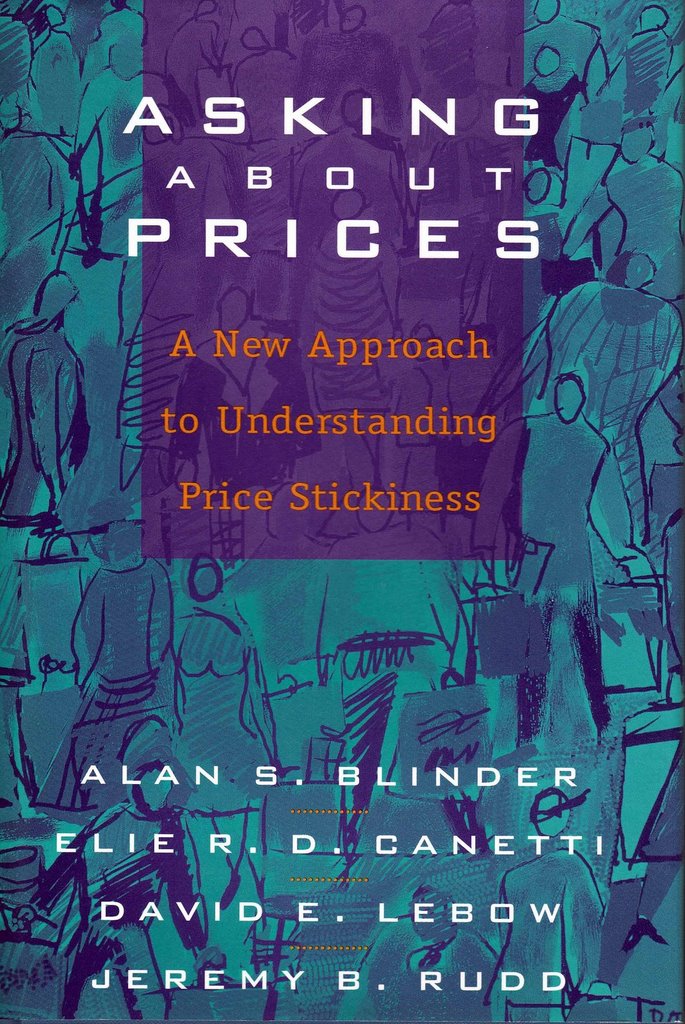
Nevertheless, this new wave of research (see sources at the bottom of The Economist story) adds to the work of Alan Blinder, his team, and their seminal 1998 book “Asking About Prices”
Saturday, November 18, 2006
When is a Low Cost Airline not a Low Cost Airline?
When is a low-cost airline not a low cost airline? It seems to be a question being asked by many commentators and passengers these days. And why not? Here’s a list of just some of the ‘optional extra’s available from various airlines, both here in Australia and overseas…
- Business class lounges (pay-per-use)
- Seats with extra leg room
- Inflight entertainment (prices can vary by flight length)
- Light meal
- Single meal
- Full service meal
- Headphones for the inflight entertainment
- Portable video player (cheaper if booked in advance)
- Your baggage (also cheaper if booked in advance)
- Comfort kits (blankets, eyeshades, socks, inflatable neck support)
- Kids entertainment backpack (colouring book, pencils, stickers puzzle, soft toy & postcards)
Once you’ve selected your “optional extra’s” and possibly made your way to the out-of –town airport that the carrier uses, you may find you total costs are not that different from those offered by a full service airline out of a more convenient airport.
I’ve already speculated elsewhere on this blog that the day may one day come when a low cost airlines attempts to monetise the aircraft toilet. The other possibility is that the low costs airlines, sooner or later, go full circle and start bundling up all these optional extras, in the same way regulators around the world are increasingly demanding that airlines advertise airfares exclusive of taxes and surcharges.
How much to see U2
 Is it coincidence that Irish rockers U2 and the G20 Finance Ministers are all in Melbourne tonight? Maybe the four members of U2 should rename the band G4?
Its a warm night and as I have the front door open, I can hear the music of U2 coming from the telephone company dome.
The finance ministers are less noisy.
I have no idea what it cost to attend tonights U2 concert. But I do know that 22 years ago, during their first tour to Australia in 1984, it only cost $19.90 to see them.
Monday, October 23, 2006
On the Road Again
 Next month, I start a two-city pricing roadshow, heading back to a couple of my favourite destinations.
First stop is Mumbai, India on Thursday 16th & Friday 17th of November. And from there, its over to Dubai in the United Arab Emirates (pictured) for a workshop on Sunday 19th and Monday 20th November.
I look forward to seeing readers of this blog at one of these two workshops.
If you're not in one of these cities, or cannot make it to one of these events, just drop me an email. There are more events coming up in 2007 - one might just be near you!
Subscribe to:
Posts (Atom)

 Posts
Posts

