Sunday, November 19, 2006

Sticky Prices

Avid readers of this blog may recall my previous post on the subject of price changes. The “Economic Focus” column in last week edition of The Economist also looked at the subject of price changes and price stickiness.

The Economist understands the importance of pricing from both a macro and a micro –economic perspective: “Shifts in prices are like the traffic lights of an economy” it says.

The article looks at how economists on both sides of the Atlantic are looking at the volatility of prices and the velocity of their change. For example, two of these economists, Bils and Klenow, have obtained 1995 – 1997 data for 350 items in the US Bureau of Labour CPI basket to calculate that these prices changed at least every four or five months.

Some other interesting findings:

* Sales account for 87% of changes in the price of clothes, 67% of furniture price changes and 58% of processed food price changes;
* Price changes in Europe tend to be bigger than in US (average increase of 8%, average decrease of 10%), and;
* High inflation leads shops to raise prices more often (now there’s a self-fulfilling prophesy if ever I heard one).

What the article does not explore, and which pricing professionals would be particularly interested in, is (a) the reasons for the price changes (competition, costs) and (b) what the impact of those changes was (revenue growth, market share objectives).

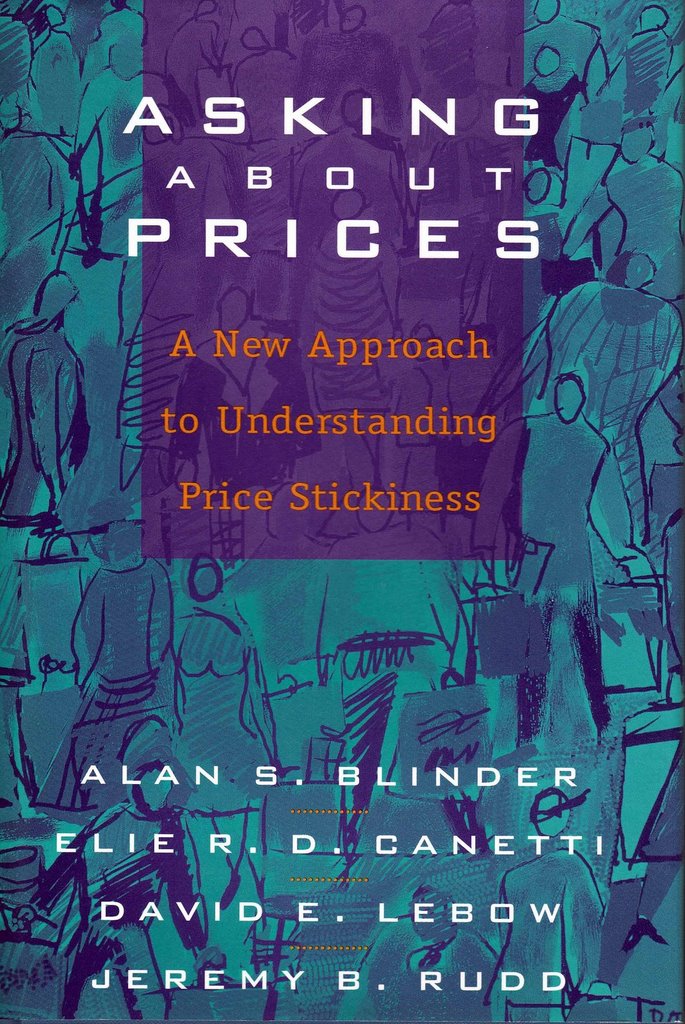
Nevertheless, this new wave of research (see sources at the bottom of The Economist story) adds to the work of Alan Blinder, his team, and their seminal 1998 book “Asking About Prices” Posted by Picasa

Saturday, November 18, 2006

When is a Low Cost Airline not a Low Cost Airline?

When is a low-cost airline not a low cost airline? It seems to be a question being asked by many commentators and passengers these days. And why not? Here’s a list of just some of the ‘optional extra’s available from various airlines, both here in Australia and overseas…

  • Business class lounges (pay-per-use)
  • Seats with extra leg room
  • Inflight entertainment (prices can vary by flight length)
  • Light meal
  • Single meal
  • Full service meal
  • Headphones for the inflight entertainment
  • Portable video player (cheaper if booked in advance)
  • Your baggage (also cheaper if booked in advance)
  • Comfort kits (blankets, eyeshades, socks, inflatable neck support)
  • Kids entertainment backpack (colouring book, pencils, stickers puzzle, soft toy & postcards)

Once you’ve selected your “optional extra’s” and possibly made your way to the out-of –town airport that the carrier uses, you may find you total costs are not that different from those offered by a full service airline out of a more convenient airport.

I’ve already speculated elsewhere on this blog that the day may one day come when a low cost airlines attempts to monetise the aircraft toilet. The other possibility is that the low costs airlines, sooner or later, go full circle and start bundling up all these optional extras, in the same way regulators around the world are increasingly demanding that airlines advertise airfares exclusive of taxes and surcharges.

How much to see U2

Is it coincidence that Irish rockers U2 and the G20 Finance Ministers are all in Melbourne tonight? Maybe the four members of U2 should rename the band G4?

Its a warm night and as I have the front door open, I can hear the music of U2 coming from the telephone company dome.

The finance ministers are less noisy.

I have no idea what it cost to attend tonights U2 concert. But I do know that 22 years ago, during their first tour to Australia in 1984, it only cost $19.90 to see them. Posted by Picasa

Monday, October 23, 2006

On the Road Again

Next month, I start a two-city pricing roadshow, heading back to a couple of my favourite destinations.

First stop is Mumbai, India on Thursday 16th & Friday 17th of November. And from there, its over to Dubai in the United Arab Emirates (pictured) for a workshop on Sunday 19th and Monday 20th November.

I look forward to seeing readers of this blog at one of these two workshops.

If you're not in one of these cities, or cannot make it to one of these events, just drop me an email. There are more events coming up in 2007 - one might just be near you! Posted by Picasa

Monday, October 16, 2006

Fuel Surcharges

The New Zealand website Scoop reported today that Singapore Airlines had decided to lower its fuel surcharge. You can read the full story here. In New Zealand, airfares have to be all-inclusive (not Fare + Taxes + Surcharges), so it would seem that there is no price drop for tickets sold inside NZ.

Meanwhile, also today (spooky, huh?), Qantas announced it too was reducing it fuel surcharge, although News Corp could not help notice that last week Qantas had actually announced a fare rise. Was the fare increase and the surcharge decrease designed to offset each other, the paper asked?

Ticket Scalping

Massachusetts is an interesting state when it comes to pricing. Not only does it have an item pricing law (every item has to have a price tag), it also has an antiscalping law.

That law says that, if one obtains a license, one can resell ticktes for a $2 mark-up above face value, plus certain service charges.

That really doesn't leave much room for an "honest ticket scalper" to make much margin when Ticketmaster charge fees of around $11.25.

No wonder Debbie Lacey accused scalpers of "obscene gouging" when she received a $42 face value Boston Red Sox ticket that had been purhcased for her for a price of $424

Who'd want to be an antlerless deer in Indiana?

Many of you might know that I'm a dedicated follower of pricing glitches and disasters. Here's the latest to land in my Inbox.

It seems that there has been a pricing glitch at the Department of Natural Resources, who dish out bonus deer shooting permits.

- With apologies to all the animal liberationists and lovers of Bambi who may read this blog/posting -

Wednesday, October 11, 2006

Lemonade for my Pimms

As the temperature in Melbourne today headed for a very unseasonal (for mid-October) 29deg C, I decided to head for the supermarket to grab some lemonade to make that most British of summer drinks: Pimms and Lemonade.

Following on from my last post, I discovered that Schweppes mixer bottles of lemonade have now gone from 315ml to 300ml.

I'm not sure what, if any price change, accompanied the volume change. I wonder whether the new bottle will draw consumers attention to or away from the change in volume? Posted by Picasa

Tuesday, September 19, 2006

Change in Price vs Change in Size

It is widely recognised that customers are more sensitive to a change in price that they are to a change in size. What exactly does that mean? Small changes in weight or volume can be likened to “stealth” price changes, the benefits from which should flow straight through to the organisations’ bottom line. Here are a couple of historical examples:

♣ Between 1970 and 1995, the Hershey Chocolate Company in the United States reduced the weight of its chocolate bars fifteen times, but raised prices only four times.

♣ In the US in the 1950s, the average candy bar cost $0.05c. By 1983, this had risen to $0.35c, with prices increasing in 5 cent increments. Typically, the size of the bar increased at the time price increase, but it was later reduced before the next price increase.

♣ Finally, there is the example of Mars, and what it did with Britain’s biggest selling chocolate bar in 2002: it whipped the bar’s nougat in a different way, which reduced its weight from 65g to 62.5g, while leaving its price unchanged at £0.29.

And here are a couple of current examples, courtesy of the story on A Current Affair last Friday (Channel 9, 15th September 2006, 18:30hrs). The story talked about the following examples of product shrinkage:

♣ Schweppes soft drinks going from 315ml to 300ml
♣ Dolmio vegetable soup losing 20g
♣ Kellogg’s Mini Wheats shedding 55g
♣ PK Chewing Gum pellets losing a mere 0.3grams

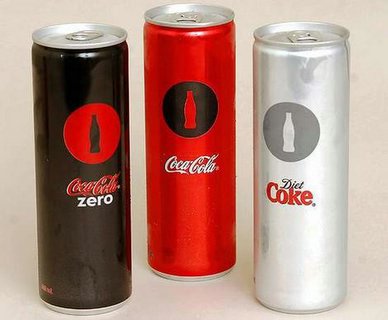
All of the above historical and current examples have involved and reduction in volume and no change in price. Coca-Cola however have done something different however: in launching the new 300ml cans shown above, they have both reduced volume (from 375ml to 300ml) and increased price (from $1.50 for the 375ml cans, to $2.00).

According to press reports, Coke’s change in pricing and packaging is based on market research and factors such as downsizing by health conscious Australians and helping parents control the portions given to children.

Fact or Fiction? Who knows? And what about the Red Bull factor – the size of the can bears an uncanny resemblance to the size of a Red Bull can. And in the US, the average price of a 288 ounce case of Red Bull yields a price of $69.45, compared to $18.08 for Cherry Coke and $9.41 for Coca-Cola.

Would you miss 2.5g of a Mars Bar? Will you buy 300ml slim-line cans of coke for $2? Post your thoughts below.

Perhaps this is something people involved in pricing in Zimbabwe could try - at least it wouldn't get them arrested for increasing pricesPosted by Picasa

Saturday, September 09, 2006

The Price of a Penny

Readers of this blog may recall my posting on 19th May this year regarding the rising price of copper which is used in 2p coins in the UK.

Well, two metals are used to make the one cent coin in the USA (zinc, as well as copper), and according to the Quincy Herald Whig, it now costs 1.23 cents to make a 1 cent coin. The article goes on to question whether 1c coins should remain in circulation in the US, and introduces readers to two wonderfully named organisations:

Citizens for Retiring the Penny, who want the 1c coin removed from circulation in the US, and prices rounded to the nearest nickel, and;

Americans For Common Cents, who believe that 70% of Americans want to hang onto 1c coins.

Its great to see that competition is alive and well in America!

Friday, September 08, 2006

Interesting little price tag...

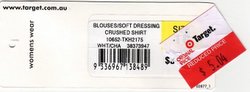
Here's an interesting price tag. My wife recently puchased a blouse at (the house of) Target, on sale, for only $5.04.

When she told me the price, I thought she was kidding. Why would a retailer price at $5.04 rather than say $4.99?

One of the reasons put forward for the use of price points ending in 99c is that the shop assistant had to open the till to give the customer back a penny. This prevented them pcoketing the proceeds of the sale.

That is not a reason in this case: one cent coins were removed from circulatation many years ago now, so had my wife paid with a five dollar note and a five cent coin, both could have found their way into the assistants pocket without a "where's my change query?" from the shopper.

Of course, the other possible explaination is that the $5.04 price point has been recommended by some sort of pricing or markedown optimisation software used by Target. Posted by Picasa

Saturday, August 26, 2006

Remember the Good Old Days?

This photograph appeared in The Age on Thursday 24th Aug 2006.

It is a photo of a service station in Fitzroy, an inner suburb of Melbourne.

And no, there is not a "1" missing from the price board. Apparently, this photo was taken in 1989, when petrol was just 47.9 cents a litre.

Here's a couple of other historical price comparisons...

In December 1997, 250g of Milk chocolate typically cost around $2.87. Todays, the price is around $3.67

A kilo of potatoes has risen from $1.42 to $2.42 over the same period

Posted by Picasa

Tuesday, August 15, 2006

Book Review: Smarter Pricing, by Tony Cram

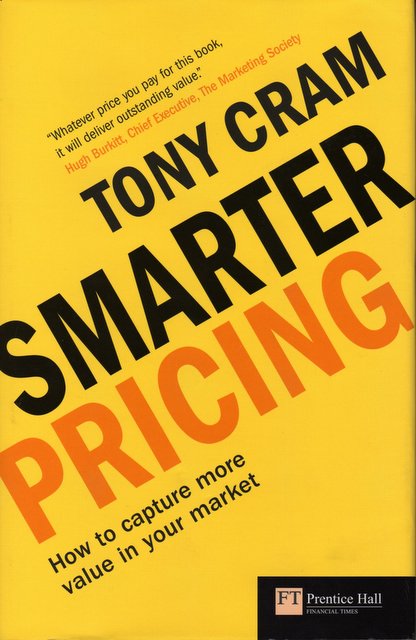
I’ve just finished reading this book: “Smarter Pricing” by Tony Cram. Refreshingly for the author of a pricing book, Tony is a Brit, “…based at Ashridge Business School where he researches, teaches, consults and writes on customer value and the dynamics of long-term business relationships".

This book is an enjoyable read and there are many interesting little case studies and vignettes in its 206 pages. It is divided into 4 parts and contains 10 chapters.

I do get the sense however that, perhaps Tony has been let down by his proof-readers and editors. The content is certainly refreshing (something old, something new), but there is also a bit of room for improvement. In some places, such as on page 41, I felt like I was actually in a lecture being given by Tony:

Action: how to gain from price indifference brands

I was also particularly concerned with the following sentence on p176:

“Manufacturers that have been able to demonstrate to retailers that they have worked hard to cut costs out of their system will be reaping the rewards as retailers will be more open to considering price increases.”

Now, correct me if I’m wrong, but if that was me, I’d be asking for a price decrease if the manufacturer had lowered their costs ???

Don’t get me wrong however. This is an enjoyable read for anyone taking a first look at pricing. Definitely worth a look. Posted by Picasa

Friday, August 04, 2006

Revenue Friendly Advertising

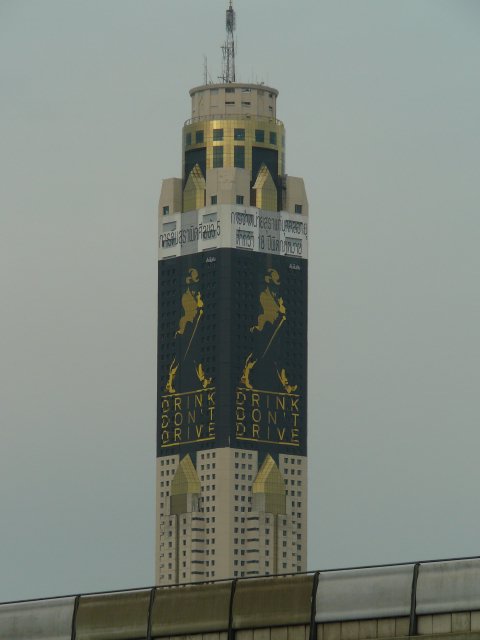
The advertising strap line "Don't Drink and Drive" is a common one, used in many parts of the world. Taken literally, its main message is don't drink AND don't drive.

While in Bangkok last week, I took this photo of one of the tallest buildings in the city. As a landmark building in the city, it is highly visible to the 6mill registered inhabitants of the city, as well as the (estimated) 3mill unregistered inhabitants of the city (which makes a pricing professional wonder what sort of cost-per-thousand, or CPM, pricing would be used on this form of advertising?

But also, note the subtle change in the strapline, which is revenue friendly. Johnnie Walker have ditched the "don't drink and drive" theme, replacing it with "drink, don't drive". In other words, keep buying our product and drinking it...just stop driving. Posted by Picasa

Pricing Unlocked in Kuala Lumpur and Bangkok

Thank you to all the delegates who came along to the "Pricing Unlocked" events that were held in Kuala Lumpur and Bangkok last week.

Pricing in this part of the world is never easy, but I hope it will now be a bit less painful for those who came along and learned from these highly interactive and informative events.

Please feel free to contact me if you are interested in a customised in-house pricing workshop for your organisation. Posted by Picasa

Friday, July 14, 2006

World Pricing Day?

If there was ever a day worth declaring "World Pricing Day", could today (14th July) be it?

Two suitable days spring to mind. The 23rd of February, when in 1917 the Russion Revolution begain following Government imposed controls over the price of bread.

Today of course, in 1789, was the storming of the Bastille and the start of the French Revolution, which also began after citizens complained about the price of bread.

Such is the power of pricing.

Also on this day, The Economist has published a letter I wrote in response to an article on Online Advertising Pricing models, although my letter, like the comments above, relates more to the history of pricing than online pricing models. My letter is third from bottom, and it contains a link to the original story (highly recommended).

I'm sure you will see the "French Connection" in both the contents of the letter and of course the name of my company. Posted by Picasa

Tuesday, July 11, 2006

Another Oil Price Cartoon

Here's another cartoon on the pricing of oil, gas, petrol...whatever you call it...courtesy of Wayne Stayskal at Slate (11th July 2006) Posted by Picasa

Friday, June 30, 2006

Here we go again (?)

According to The Wall Street Journal of 30th June 2006...

"Chrysler plans to unveil an employee discount plan for consumers and the
release of a new model in a bid to spur sales."

If you missed this topic last time around, you can read what happened to GM's efforts to launch "Employee Pricing for All" in Australia here, and my original post on the topic is here.


Saturday, June 24, 2006

Fractional Ownership: The Resaissance of Timeshare

In the December 2005 edition of the Wiglaf journal, I wrote about some of the developments and milestones that were witnessed in The World of Pricing in 2005. An earlier version of that article appeared on this blog here. As we pass the half way point of this year, is it too early to speculate on what might be one of the most important developments for 2006?

More and more companies around the world, from Seattle, to Shanghai and Sydney, are trying to sell more services. After all, as Allmendinger and Lombreglia point out in the October 2005 edition of the Harvard Business Review[1]:

“…smart service providers are..deriving more than 50% of their revenues and 60% of their margin contributions from service, as opposed to product sales.”

An increasing number of companies around the world are finding a solution to this challenge in a business model that was developed 43 years ago by the French company Société des Grands Travaux de Marseille. The model is applicable in B2B markets, where company’s like NetJets has been using it for years. Likewise B2C companies, like GolfClubDemo.com, Bag, Borrow and Steal and Bags to Riches are using it. Even former Formula 1 driver Damon Hill has adopted the model at his company P1 International. What is this model? You may know it as time-share, or the by the increasingly common moniker of ‘fractional ownership’.

Who’s doing it?
At P1 International, members pay a £2,500 joining fee and either a £11,750 or a £13,750 membership fee, in exchange for anywhere between 50 and 70 days a year in a high performance vehicle like a Bentley Arnage T or a Lamborghini Murcielago. Manhattan’s Classic Car Club and Club Sportiva in San Francisco offer similar services to P1 International.

Log on to GolfClubDemo.com and select a new driver or putter to test. It will be FedEx-ed to you in two days, after which you have a week to work on your handicap. Return the club in the supplied FedEx boxes and select another club, or apply the $25 charge for the club to a purchase from a partner retailer.

And while he is on the golf course, she can part with between $19.95 and $174.95 a month and be seen with the latest Chloe, Fendi or Gucci handbag, and hang onto it for anywhere between one day and six months.

A Subscription Model by Another Name?
All these companies, and others, are offering what is most commonly known as fractional ownership schema. Other commentators use terms such as Leasing Luxury or Temporary Ownership[2]. Regardless, most customers of these company’s, in one way or another, are joining forces to purchase collectively, or qualify to rent or lease, a product or service that would otherwise typically be out of reach for the consumer.

Writing in the Harvard Business Review recently, Pedraza and Bonabeau[3] attempted to distinguish fractional ownership from a concept they term ‘variety-in-luxury’. Taken literally, variety-in-luxury also describes one of the main benefits of such schema, allowing customers to do something that otherwise would be very expensive to do: experience variety in luxury goods. Where variety in a product is more important than access to it, the authors believe variety-in-luxury is the paradigm. Fractional ownership on the other hand, applies to the situation where “access to an item is more important than variety”.

To illustrate the difference, they give the example of Tanner and Haley Resorts that, in return for upfront fees of $300,000 to $500,000 (for a 30 year membership), annual fees of between $5,000 and $20,000 and overnight rates of between $200 and $400, members can live in a variety of luxury properties for up to 60 nights a year. While variety may be more important than access in this particular example, the concept of value is determined by the customer, and not by the product or asset category. Luxury cars for example could equally fall into the categories of both fractional ownership and variety-in-luxury.

The Fractional Ownership Society
There is a long list of reasons why fractional ownership is booming, some of which relate to the product and the business model itself, while others reflect broader trends and developments in society in general.

Fractional ownership is ideally suited to “Generation Debt”, those consumers who want the best in life, but don’t want to save up for it. It is also ideal for those who don’t want to hang on to assets for too long: like shoppers at Ikea, they don’t purchase furniture to pass on to the next generation. This is particularly the case with classes of assets that depreciate, rather than appreciate. And of course, the customers get the benefits of using the products without actually owning them, as well as the ability to change the product according to their whim or fashion.

What’s In It For the Company?
The rewards for companies who can sell a product as a service are potentially enormous. These models offer a revenue stream, like an annuity, rather than the one-off, lump sum payment reaped from a single transaction: selling the product. Furthermore, if all five pre-requisite of revenue/yield management can be put in place[4], such services can be sold in a way that minimises the consumer surplus, in the same way that airlines, hotels and car rental companies attempt to do so.

However, like an airlines’ fleet of aircraft, fractionally-owned products only make money when they are working. A handbag or golf club doesn’t make money while it is sitting on a shelf. It should however, be possible to depreciate the inventory of fractionally-owned products.

Companies offering fractional ownership schemes can also enter new market segments. They can capture the middle market, which may consist of customers who can’t afford outright ownership of a luxury product, but don’t tolerate knock-off products.

Fractional ownership schema also allows customers to enjoy the benefits of a product without the inconvenience of ownership. Members of Damon Hill’s P1 International can drive a Ferrari without having to worry about insurance, maintenance or registration. While they are out driving, no one knows that they are not the outright owner of the vehicle. And of course, when they pull into the country club, with a new set of (GolfClubDemo.com) golf clubs, they can be tested on a real golf course, and not in the back of a pro shop. All of which helps the customer make a more informed purchase decision, having found (cost-effectively) the product they really want.

More Pro’s than Cons
Sounds too good to be true? Well there are a few risks and potential downsides associated with fractional ownership schema, but fortunately most of them can be mitigated. Any fractional ownership provider runs the risk that ‘runners’ will shoot through with the product. This situation can of course be mitigated by vendors taking out appropriate insurance.

Another possibility is that the product gets returned damaged: a Mont Blanc fountain pen leaks in a Gucci handbag for example. No problems in the case of Bag, Borrow and Steal, where customers can take out insurance for anywhere between $5 and $40.

Finally some fractional ownership models allow customers to keep the product for as long as they like, a practice that may not assist in optimal scheduling of the next hire, as well as diluting the potential benefits of a revenue/yield –managed service.

Premium Products, Premium Services
There is a lot of value in many of the fractional ownership schema examined above. Product and service providers that understand the value their products are delivering should be able to capture that value in premium pricing. Commercial aircraft in the US can land at 500 airports, while Biz Jets, such as those operated by NetJets, can land at 5,000 airfields. It is value propositions like this that should help command premium pricing for what Allmendinger and Lombreglia call smart service providers.

References

Anon (2006) “Ferarries to go” in The Economist, 14th January, p65

D’Innocenzio, Anne (2006) “New Ways to Satisfy Lust for Leasing Life of Luxury” in The Seattle Times, 21st March, accessed online at www.seattletimes.com on 21st March 2006

Foust, D (2006) “Now You Can Try ‘Em Before You Buy ‘Em” in Business Week, 30th January, p107

Gross, D (2006) “How Much For Those Used Jimmy Choo’s?” in Slate, accessed online at www.slate.com on 22nd March 2006

Jackson, K (2006) “Renting Luxury” in Open Skies, January, p31

Pedraza, M & Bonabeau, E (2006) “What is Luxury Without Value?”, in Harvard Business Review, April, accessed online at www.hbr.org on 29th March 2006

All prices mentioned are in US dollars

Footnotes

[1] “Four Strategies for the Age of Smart Services”

[2] D’Innocenzio, Anne (2006) “New Ways to Satisfy lust for leasing life of luxury” in The Seattle Times, 21st March, accessed online at www.seattletimes.com on 21st March 2006

[3] Pedraza, M and Bonabeau, E (2006) “What is Luxury Without Value?”, in Harvard Business Review, April, accessed online at www.hbr.org on 29th March 2006
[4] The five prerequisites for revenue/yield management are: (a) the product is perishable, (b) there is limited capacity of the product, (c) demand for the product is variable, (d) incremental costs are low or non-existent and (e) market segmentation is possible. Posted by Picasa

Thursday, June 15, 2006

How not to price...

Here's an example of how not to price, discovered on the wesbite www.maplin.co.uk, and sent to me by my very good friend, Alan Cooper at Managing Change.

It speaks for itself. Posted by Picasa